KEEP DRIVING. YOUR PRESCRIPTION IS PROBABLY READY.
We have the best visibility HartFit has ever had.
Our course sits directly off Elbert Road, fully exposed to traffic. Even during an unremarkable weekday, roughly 20 vehicles pass us every hour. They can see the obstacles. They can see the banners. They can see people carrying buckets, climbing ropes, swinging through rigs, and voluntarily doing things that appear completely unreasonable to anyone headed toward Dutch Bros.
Visibility is not our problem.
The other day, Rory and I decided to do what normal people apparently do and went out for a beer at one of the local establishments here in Falcon.
We lasted approximately three minutes and 20 seconds before I wanted to get the hell out of there.
It was that same feeling you used to get walking into Walmart at 11:00 at night, except Walmart was never pretending to be a social experience. Walmart understood the arrangement. You came in for batteries and laundry detergent, witnessed several scenes that raised questions about the future of the species, and quietly went home justifying your decision because you saved a few bucks.
Sitting there, however, something finally occurred to me.
These are the people driving past HartFit every day.
Not some mysterious demographic we have failed to reach. Not a hidden population waiting for the right Facebook ad. Not athletes who simply haven’t discovered us yet.
The people passing our property are the same people sitting in those establishments drinking away another afternoon, staring blankly into their phones and looking as if waking up that morning had already exceeded their recommended daily allowance of adversity.
I don’t mean everyone was medically overweight, clinically depressed or spiritually dead. I didn’t bring a scale, obtain bloodwork or conduct a formal psychological assessment between ordering and abandoning my beer and my hope for society.
But let’s also stop pretending America’s condition is some cruel optical illusion.
According to the CDC, roughly two out of every five American adults have obesity. The OECD reports a self-reported obesity rate of 35% in the United States compared with a 19% average among OECD countries. It also found that 36% of American adults do not get sufficient physical activity, compared with an OECD average of 30%. That isn’t my judgmental imagination. That is an entire country slowly becoming less capable while developing increasingly sophisticated language to avoid acknowledging it.
We are not merely falling behind the rest of the developed world. We are paying substantially more for the privilege.
The United States spends approximately $14,885 per person on healthcare, compared with an OECD average of $5,967. We spend two and a half times as much, yet American life expectancy remains below 80 while the OECD average is 81.1 years. We have somehow created the most expensive healthcare system in the developed world while producing a population that increasingly cannot climb stairs without negotiating terms.
That is almost impressive.
America has transformed physical deterioration into a recurring-revenue model.
Nearly half of Americans used at least one prescription drug within the previous 30 days in the CDC’s latest published national figures. Almost one-quarter used three or more. More than one in eight used at least five. In 2024 alone, retail prescription-drug spending reached $467 billion, an increase of 7.9% in a single year.
To be clear, medication saves lives. Some people need it, and no responsible fitness professional should ever tell someone to ignore legitimate medical treatment.
But there is an enormous difference between treating unavoidable illness and building an entire culture around chemically managing the predictable consequences of how we have chosen to live.
The pharmaceutical industry does not need you strong, capable and difficult to kill. It needs you functional enough to keep going but unhealthy enough to remain a customer. There is considerably more money in managing the same preventable condition for 30 years than there is in helping someone change the behaviors contributing to it.
Fortunately for them, America has become extremely cooperative.
We will pay for the beer. We will pay for the drive-thru coffee containing enough sugar to qualify as cake. We will pay for the streaming subscriptions, delivery fees, tattoos, manicured nails and monthly medications needed to keep the machinery operational.
Then we will drive past a $20 workout and announce that getting healthy is too expensive or that broccoli will break the bank but Carl Jr’s is a deal because they give you something slightly resembling food for $10.
That was the part I couldn’t stop thinking about.
Some of the people in that room undoubtedly believe they cannot afford to exercise. They will say they don’t have the money, don’t have the time or need to “get in shape first.” Then they will spend more than the cost of one of our classes before noon the following day without even recognizing that they made a choice.
Because it is a choice.
Not always an easy choice. Not an equal choice. Not a choice unaffected by genetics, injury, mental health, work schedules or financial circumstances.
But still a choice.
And that is the message our culture is now terrified to deliver.
We have become so committed to protecting people from feeling ashamed that we have begun protecting them from feeling responsible. Every limitation requires validation. Every bad habit comes with a diagnosis. Every uncomfortable truth must be softened until it becomes so emotionally safe that it is no longer useful.
Meanwhile, more than 194 million American adults reported at least one chronic condition in 2023. Among middle-aged adults, nearly eight out of 10 reported at least one, and more than half reported multiple chronic conditions.
We aren’t winning the battle against chronic disease.
We have simply become better at making surrender feel like self-care.
That is why most of the people driving past HartFit will never turn in.
It isn’t because they cannot see us. It is because what we represent asks a question they would rather not answer.
What are you still capable of?
Not what medication are you taking. Not what diagnosis have you collected. Not what happened to you 15 years ago. Not what motivational phrase you posted beneath a filtered picture.
What can your body actually do?
Can you carry something heavy when nobody is helping you? Can you pull yourself over a wall? Can you get up from the ground without using the furniture? Can you remain calm when your heart rate rises and the task in front of you becomes uncomfortable? Can you keep moving when your body begins searching for an excuse?
These are not athletic questions.
They are life questions.
HartFit was never built exclusively for people who already look like athletes. Honestly, those people usually need us less. It was built for the person who has slowly surrendered pieces of their capability without realizing how much has disappeared.
The person who gets winded carrying groceries.
The parent who cannot keep up with their child.
The adult who takes medication for one condition, another medication to manage the effects of the first, and has accepted exhaustion as an unavoidable feature of getting older.
The person who keeps driving past because turning in would require admitting that something needs to change.
Controlled adversity is not punishment. It is preparation.
We carry buckets, climb obstacles, run hills and practice moving beneath fatigue because life will eventually place weight in your hands without asking whether it is convenient. It will put walls in front of you without providing a bypass. It will demand strength, balance, coordination, resilience and composure regardless of whether you ever made time to develop them.
You do not have to become an elite athlete.
You do not need expensive shoes, coordinated workout clothes or a social-media announcement declaring the beginning of your “fitness journey.”
You simply need to stop surrendering.
Turn off Elbert Road. Walk onto the property. Be uncomfortable for an hour. Discover what has been neglected, and begin rebuilding it.
Or keep driving.
There will always be another beer, another prescription and another perfectly reasonable explanation waiting for you.
What there will not always be is more time.
FRONTLINE OCR: THE MOST IMPACTFUL MISSION DISGUISED AS A RACE.
Obstacle racing has become very good at celebrating personal success.
Your medal. Your photo. Your podium. Your transformation. Your story.
There is nothing wrong with being proud of what you have accomplished. But Frontline OCR was never built to exist entirely around you.
It represents the people whose missions do not end when conditions become inconvenient.
The service member does not walk away because the operation lacks polish. The firefighter does not turn around because the building is hotter than expected. The police officer, paramedic and first responder do not get to decide that today’s emergency no longer deserves their attention.
They answer the call.
That is the foundation of Frontline OCR.
Honor. Integrity. Sacrifice.
Disguised as a race.
You will see walls, mud, carries, rigs and a finish line. You will receive a number and hear a starting command. From a distance, it looks like another obstacle race.
It is not.
The obstacles are simply how Frontline delivers the message.
Frontline exists to honor the men and women willing to step forward when everyone else is trying to get out of the way. It represents those who accept responsibility for a cause, a team, a uniform, a community or a country.
Not because it is profitable.
Not because anyone is watching.
Not because the experience has been carefully designed around their personal satisfaction.
They do it because the mission still matters.
That distinction has been lost in much of obstacle racing.
The sport has spent years telling athletes that everything is about them. Events chase trends, lower expectations and manufacture moments designed to look impressive for the six seconds required to post them online.
You crossed a finish line. You got another medal. Someone took a photograph.
Congratulations on completing the transaction.
Frontline asks a different question.
What are you capable of when your accomplishment is no longer the most important thing happening?
The course is demanding because the people it represents do demanding things. The obstacles are legitimate because pretending difficulty serves no one. The carries are heavy because sacrifice is supposed to have weight.
You might fail an obstacle.
You may reach a point where your confidence no longer matches your ability.
You may discover that previous medals, podiums and carefully maintained opinions about yourself cannot move you another foot down the course.
Good.
That is where the race finally becomes honest.
Frontline does not exist to protect your ego. It exists to reveal whether something remains after your ego stops being useful.
Strength without purpose is just performance.
Success without integrity is decoration.
And courage that disappears when conditions become uncomfortable was never courage.
Frontline gives you an opportunity to earn your finish. That means there must also be an opportunity to come up short. Otherwise, the finish line means nothing and the medal is simply merchandise included with registration.
The Special Forces vest carries weight for the same reason.
It is not a costume, souvenir or upgraded race package. It represents a standard. Athletes step onto the course knowing that retaining it will require strength, endurance, obstacle ability and the willingness to keep moving when the course begins stripping away excuses.
Some athletes have returned to defend it.
Others stepped forward, took their shot and discovered exactly where their limits were.
Frontline respects both because both were willing to face the truth.
But showing up once does not complete the mission forever.
Past success does not grant permanent credibility. A podium from years ago cannot answer today’s call. Neither can a stack of medals, a social media following or a reputation carefully preserved by avoiding situations where it might be challenged.
The people Frontline represents do not get to live on what they accomplished yesterday.
Neither should we.
If you walked away from obstacle racing because it became repetitive, hollow or obsessed with spectacle, I understand.
But if you walked away from Frontline because it was not convenient enough, polished enough or large enough to validate your presence, then perhaps you never understood what the race represented.
The people honored by this event cannot abandon their mission every time the conditions disappoint them.
They adapt.
They endure.
They serve.
They return.
That does not mean blind loyalty. Integrity requires honesty. Standards matter. Leadership matters. The experience must be worthy of the mission, the athletes and the people whose service gives Frontline its meaning.
But rebuilding something worthy requires people willing to step forward—not people waiting safely at a distance until someone else has done all the difficult work.
Frontline is not asking for spectators disguised as supporters.
It is calling for people capable of the mission.
The athlete attempting their first obstacle race.
The Special Forces competitor defending a vest.
The veteran searching for another place where effort and accountability still mean something.
The firefighter, police officer, paramedic or military family who understands that service is never carried by one person alone.
The volunteer who stands in the same place for hours because every athlete deserves someone there.
The family waiting at the finish line.
The sponsor willing to put its name behind something more meaningful than impressions and engagement metrics.
Every one of them is part of Frontline.
That is what community looks like when “community” is not being used to sell a registration.
Frontline has never needed to be the largest race in obstacle racing. It does not need twenty thousand participants, a national tour or someone filming a speech about adversity from an air-conditioned hotel room.
It needs people who believe honor still matters.
It needs people who understand that integrity is what remains when recognition disappears.
It needs people willing to sacrifice something for an experience that represents those who have sacrificed far more.
Frontline is demanding without manufacturing difficulty. Competitive without forgetting the cause. It can celebrate the strongest athletes on the course while still recognizing the person whose greatest victory was finding the courage to start.
Because the mission is bigger than the podium.
The walls, rigs, carries, mud and distance do not create honor, integrity or sacrifice.
They give those things somewhere to appear.
They expose preparation. They expose character. They reveal whether you remain honest when nobody would notice the shortcut. They reveal whether you help the person beside you when your own race is falling apart.
Most importantly, they reveal whether you continue when walking away would be easier.
On May 22, 2027, Frontline OCR returns for its 12th Wave.
This is not an attempt to become another version of the biggest race in the industry. The world already has enough polished events selling carefully controlled adversity to people who want the photograph without the consequences.
The 12th Wave is about making Frontline worthy of its mission.
A stronger athlete experience.
A festival that brings veterans, first responders, families and the OCR community together.
Competition that means something.
Stories that deserve to be told.
A course that demands effort.
A finish that must be earned.
And an event that never forgets who it represents.
If you have raced Frontline before, this is your call to return.
If you walked away from OCR because the sport stopped standing for anything, this is your invitation back.
If you have never raced because you thought obstacle racing was only for elite athletes, influencers or people who enjoy paying to crawl through mud, this is your opportunity to discover what the obstacles were supposed to reveal.
But understand what you are answering.
Frontline is not calling you back so you can collect another medal.
It is calling you to stand for something beyond yourself.
The people this race represents cannot walk away from the mission simply because it becomes difficult, imperfect or inconvenient.
Can you?
Frontline OCR: Honor, Integrity and Sacrifice Disguised as a Race
THE OBSTACLES ONLY MATTER AS MUCH AS THE STORIES BEHIND THEM.
I keep seeing the same question come up in OCR circles.
Why don’t the smaller races, many of which probably do have better obstacles, more creative obstacles, harder obstacles, or more of that old-school OCR feel, draw the same numbers as Spartan or Tough Mudder?
Because nobody cares about the obstacles.
That sounds harsh, but I really think people need to understand that. At least not enough people care about the obstacles anymore for that alone to build a race, build a brand, or get people in a car to drive six hours to compete somewhere.
And maybe the bigger problem is that there was a time when they might have.
Maybe OCR had its opportunity to make all of this matter and we missed it.
We have some of the best OCR athletes in the country living within driving distance of HartFit. Legitimately some of the biggest names the sport has ever known. We have obstacles here that challenged them, including our Barn Gauntlet that two extremely accomplished athletes could not complete during any opportunity to do so during the FREE workout we provided them.
And you know what that proved?
Basically nothing.
They came once. For free. They saw a passion and commitment so strong for the sport that we moved states away just so we could build a legitimate course on our very own property. They haven’t lost one ounce of sleep or exactly been beating down the door to come back and join us or “overcome those obstacles.”
And these are far better athletes than we are.
One of them showed up out of the blue at two different Spartan races this year and won both times with no intention of competing in the National Series.
He just likes to run mountains, is really good at it, and could probably care less that Twister is down to two sections instead of three, vertical grips on the rig are basically extinct, and Spartan has become anything but an obstacle course race.
If it was ever truly one at all.
Out of those three athletes, they have roughly 130 showings combined between Spartan, Savage and Tough Mudder compared to seven smaller races or competitions including Frontline OCR, Indian Mud Run and The GRIT Games.
So if the argument were really true that difficult obstacles are what serious OCR athletes are searching for, you would think failing something would bother them. You would think curiosity alone would bring them back. You would think the idea that there was something they couldn’t do would gnaw at them a little bit.
It doesn’t.
Because the obstacle itself is no longer where the validation comes from.
And maybe it never really was.
Validation comes from being somewhere people believe matters. It comes from standing on a start line with hundreds or thousands of other people. It comes from the media talking about the event. It comes from photographers being there. It comes from the race making the podium look important. It comes from social media making the weekend look like something you should be afraid to miss. It comes from your friends knowing what you did and actually thinking it was a big deal.
That is what people are chasing.
People love to say athletes should just want the challenge.
Okay.
They don’t.
Or at least nowhere near enough of them do to build a healthy sport around that idea.
That is why you can offer harder obstacles, harder courses, bigger prize money, better terrain, better swag, or whatever else you want and still watch people stay home. If the event doesn’t feel important, accomplishing something there doesn’t feel important either.
The frustrating part is OCR had years to change that.
We had the participation.
We had recognizable athletes.
We had personalities.
We had rivalries.
We had people traveling all over the country every weekend.
We had enormous races.
We had television.
We had mainstream sponsors.
We had people with Spartan stickers on their cars who couldn’t wait to tell you about their next Trifecta.
We had people who built entire friend groups around this sport.
We had people planning vacations around races.
We had people walking into gyms asking how to train for obstacles.
We had people who wanted to be part of this.
And somehow, while all of that was happening, we failed to build enough of the history and culture necessary to make it survive after the novelty wore off.
Smaller OCRs have been especially bad about this.
Some of these races have had the same regional athletes dominating their podiums for years. Really good athletes. Athletes who should have become part of the mythology of those events. People outsiders should have heard about. People another athlete should want to travel across the country to race against.
They should be on banners hanging throughout the festival area.
They should be legends whose names grace plaques dedicated to past accomplishments and teasers for better athletes to come and dethrone them.
There should be history dripping from the walls of whatever atmosphere the race intends to create.
Instead, most of them remain essentially anonymous outside their local circle.
And sometimes get called “Race Tards” by a race director for getting lost on a course that was not nearly as obvious to someone redlining under the pressure of competition as it was strolling the course with tape the day before.
A podium picture gets posted. Maybe somebody gets tagged. Everybody says congratulations.
Then three days later the race account is posting early-bird registration for next year.
And instead of being celebrated for being one of the few people to ever accomplish what the race tells you is its ultimate challenge, they’re told they’ll give you a small percentage off your entry next year if you could “just do a little more marketing for us.”
What?
That is insane to me.
You spent an entire year trying to convince people your race mattered, and then almost immediately after it happened, you stopped talking about why it mattered.
Then we wonder why nobody else thinks it matters either.
You cannot create prestige without creating history, and you cannot create history if you treat every race like a disposable weekend.
Who won?
Who defended their title?
Who finally beat the athlete who had won three years in a row?
Who has the most podiums?
Who has finished every year?
Who owns the course record?
Who is the person everybody is chasing?
Did the course win this year, or did you change or soften your rules so as not to post empty podiums?
These things matter.
Sports are built around stories. People matter. Rivalries matter. Records matter. Legacy matters.
And OCR had more than a decade to build those things.
That is the missed opportunity I think we need to start talking about.
There are races out there where athletes complete legitimately difficult obstacles wearing a 20-pound vest for the entire course. That is a serious accomplishment.
And yet ask the average OCR athlete who has won those races.
They probably have no idea.
I know who has done that from our former FLATliners team, but I cannot find one definitive list of the amazing athletes who have done it since the event’s inception.
There should be a wall dedicated to those people when you walk into that race.
Out of the three big names we had here, only one had ever even heard of the race because they actually were one of the few women in OCR who have not only raced it, but completed 100% obstacle completion with the 20lb vest.
Kris Rugloski.
Kris Rugloski is one of the most recognizable athletes to have done one of those events. How many people even know she did it?
Probably not many.
That is not Kris Rugloski’s fault.
That is a storytelling problem and quite possibly one of the reason’s she never came back, nor pushed anyone in her circle to attend the next year.
Furthermore if the women she stood on that podium with, and beat by a considerable margin, had virtually no celebrated history despite years of dedication to and success at that race, did being an outsider and taking the crown even feel like it mattered?
Probably not as much as it should’ve.
And years of failing to tell those stories eventually becomes a history problem.
Because now we are trying to convince people something has a storied past after spending years barely documenting the people who created it.
For all the things Spartan got wrong over the years, early Spartan understood something incredibly important.
Their athletes mattered and were the key to building their brand because it definitely was not their obstacles.
They made Hunter McIntyre matter. They made Hobie Call matter. They made Amelia Boone matter. They made Ryan Atkins matter. They made Lindsay Webster matter.
And by making those athletes matter, they made beating those athletes matter.
It made emulating those athletes matter and provided motivation to register from the high-end competitors all the way down to the weekend warrior open participants.
Which made showing up matter.
Which made the race matter.
That cycle feeds itself.
But you have to keep feeding it.
Nobody falls in love with basketball because somebody tells them the rim is ten feet high and the court has really nice hardwood.
They want to be Michael Jordan.
They want to be LeBron James.
Kids wear jerseys because athletes give the game a face.
The game creates the athlete, and the athlete sells the game.
OCR somehow forgot this.
Now we have races basically saying, “Come race us. We have really cool obstacles.”
Okay.
So what?
Who am I racing?
Why does winning matter?
Why does finishing matter?
Why does failing matter?
Who is going to care tomorrow?
Worse, we have even had local races basically relinquish the previous accomplishments of their podium winners by changing the rules in following years to make sure they didn’t have an empty podium.
That sells desperation instead of FOMO and makes any future accomplishments highly diminished while simultaneously shitting all over the history created by previous competitors.
And I’m not sure the sport understands how damaging that is.
You cannot spend ten years changing what accomplishment means and then suddenly decide you want prestige.
Prestige has to be protected.
History has to be protected.
Standards have to mean something.
Otherwise every accomplishment comes with an asterisk depending on what year you happened to show up.
That is the part nobody wants to talk about, because right now OCR has a prestige problem.
A BIG one.
But I think it is even worse than that.
OCR may have had its opportunity to establish that prestige when millions of people were paying attention, and instead assumed those people would always be there.
They weren’t.
A lot of people outside this sport don’t think OCR is cool anymore.
They moved on.
They found HYROX.
They found running clubs.
They found CrossFit competitions.
They found whatever the next thing was that made them feel like they were part of something relevant.
And when they look back at OCR, a lot of them see something closer to the Island of Misfit Toys.
A weird little group still doing that thing everybody else stopped doing.
Believe me, we know.
We live among them and have talked to them about competing at all of these races.
Their answer?
In some cases they politely declare that though it “sounds cool,” they’re just not interested.
In others, they look at us the way the high school jock looks at the kid who just did his homework for him and then invited him to Comic Con.
That is the perception.
You can get angry about it. You can tell me they are wrong. You can tell me OCR is harder. You can tell me your obstacles are better. You can tell me HYROX is just running and wall balls and CrossFit for people who can’t compete at CrossFit.
Cool.
That’s already what every local race says about Spartan. And what every Ninja says about Savage. And what every brand’s “World Championship” says about another brand’s “World Championship.”
It doesn’t matter.
People are sheep. They are in a never-ending battle to validate their existence through whatever the world tells them at that particular moment makes them feel like they matter.
For a while, that was OCR.
Unfortunately, it no longer is.
And can you blame them?
OCR still can’t figure out what its actual World Championship is. If obstacles matter more than running. If failing two obstacles means you should still be on the complete list. If asking people to actually finish the obstacle is going to hurt too many egos and lead to fewer signups. If improperly officiated burpees or penalty loops are the way to go.
We spent years arguing about what OCR should be while apparently assuming everyone else would wait around for us to figure it out.
They didn’t.
That may be the biggest missed opportunity of all.
Perception is reality when you are trying to sell participation.
If somebody’s entire friend group thinks OCR is stupid, they are not losing sleep because they couldn’t complete your new hanging obstacle. They don’t care. Their friends don’t care. Their Instagram followers don’t care.
There is no social currency attached to solving it.
And if your race is just another brand in a fractured and fragmented sport, no one who takes a podium is truly going to feel accomplished when the accomplishment is just one of many claiming to be “the one that really matters.”
That is what smaller races are fighting.
Not Spartan.
Not Tough Mudder.
Not each other.
Irrelevance.
And harder obstacles alone are not fixing that.
We saw the exact same thing at our gym.
People assume that if you build legitimately difficult OCR training, serious OCR athletes will naturally want to come train there.
No.
They won’t.
Because a lot of them don’t care enough about becoming better at obstacles anymore.
They want the path to popularity and acknowledgement. If your race isn’t popular and nobody from a select circle acknowledges it, you won’t get them to care.
The most “well-known” athlete from our gym in Illinois was a really good runner by OCR standards but did not want to get better at more grip-intensive, technical obstacles.
The races she was running didn’t require that, and they were the biggest of the big races.
Those races validated who the best was through size, reach, attendance and notoriety.
Not necessarily obstacle creativity or difficulty alone.
She attended none of our toughest training classes, canceled class if she found out the rig was going to be tougher than what she expected and was beaten four times by my girls of “lesser caliber.”
Her words, not mine.
With the exception of one race, every race she lost at to women more proficient on obstacles than her was a local race that didn’t have the ability to make their victories matter any more than her loss.
No one heard about it.
No one cared.
Nothing changed.
That right there might explain this entire problem better than anything else.
The sport has declared over and over throughout the years that what matters even more than performance is performance with perception.
Obstacle proficiency used to be part of the identity of being a good OCR athlete. Now a lot of athletes can simply run extremely well, survive enough obstacles, and still be considered elite because they lined up with six people next to them.
Why spend hours improving something the culture itself no longer rewards?
That is the uncomfortable question.
And it is also why saying, “Our race has better obstacles” is not the marketing flex people think it is.
Better to whom?
The diehards?
There aren’t enough of them left.
The elites?
Many of them don’t care.
The general public?
Most of them don’t know the difference between Ninja Warrior, Ninja Gaiden and Ninja Turtles.
So what exactly are you selling?
That is the question every OCR race should be asking right now.
And the scary part is that I’m not convinced we get unlimited chances to answer it.
There was a period when OCR had millions of people already standing in front of it.
We didn’t have to convince them obstacle racing was cool.
They already thought it was.
Our job was to turn those participants into fans, those fans into communities, those communities into history, and that history into something people wanted to belong to for generations.
Instead, too much of the sport spent those years chasing the next registration number.
Maybe we assumed the boom would last forever.
Maybe we assumed another million people would always be waiting.
Maybe we assumed that if participation dropped we could simply make the obstacles harder, easier, shorter, longer, more technical, less technical, add another championship, create another format, offer another discount and somehow find the magic combination that brought everybody back.
It hasn’t happened.
And I don’t think the answer now is another obstacle reveal video or increasing or decreasing the difficulty hoping someone from either camp will suddenly care enough to pay for your race.
The answer, if there is still time, is making the race feel important again.
Make your winners famous within your world.
Make your repeat champions matter.
Talk about records.
Talk about rivalries.
Tell people who they are chasing.
Build history.
Show the athletes who finished something brutal and explain why what they did was exceptional.
Stop acting like the only meaningful marketing window is the six months before registration closes.
The month after your race might actually be more important.
That is when you should be creating FOMO.
That is when people should be seeing what they missed.
That is when the athlete who stayed home should be thinking, “Damn. I should have been there.”
Instead, most races immediately start posting:
SAVE THE DATE.
EARLY BIRD REGISTRATION OPEN.
NEXT YEAR IS GOING TO BE BIGGER THAN EVER.
Why should I care?
You haven’t even convinced me this year mattered yet.
That is the problem.
OCR does not have an obstacle problem.
OCR has a relevance problem.
And increasingly I wonder if it has an opportunity problem too.
The remaining people in this sport keep trying to sell the thing itself while forgetting that people usually want to belong to something that feels meaningful.
We had their attention once.
That is what makes this so frustrating.
We had the crowds.
We had the characters.
We had the stories.
We had the momentum.
We had an entire generation of people willing to identify themselves as obstacle racers.
And instead of turning that moment into a culture with a history people wanted to inherit, we acted like the next starting line would always be full.
Now we are trying to explain to people who already left why they should come back.
That is a much harder sale.
Until races figure that out, you can build the greatest obstacle course ever created. You can hang it from the moon. You can put $10,000 on the podium. You can make every obstacle harder than the last.
And a whole lot of athletes are still going to stay home.
Because nobody cares how hard your obstacle is if nobody cares that you beat it.
And unfortunately, missed opportunities don’t often give you a second chance.
OCR had one hell of an opportunity.
Maybe there is still enough left to build something meaningful out of what remains.
But if there is, we probably need to stop pretending the answer is another obstacle.
And 30 burpees aren’t getting us out of this one.
THE SCIENCE BEHIND CONTROLLED ADVERSITY FITNESS
The fitness industry has a remarkable ability to overcomplicate things that human beings have been doing successfully for hundreds of thousands of years. Every few years we invent another acronym, another certification, another revolutionary training system that promises to unlock the secret our ancestors somehow stumbled into by accident while trying not to get eaten. We package it, trademark it, assign it a color-coded heart rate chart and charge a monthly membership fee to explain why carrying heavy things is suddenly groundbreaking. The funny part is that the science isn’t actually pointing us toward more complexity. If anything, it’s pointing us back toward something we’ve spent decades engineering out of everyday life.
Human beings evolved through adaptation.
Not comfort.
Not convenience.
Adaptation.
Every generation before ours faced physical uncertainty almost daily. They climbed because there wasn’t a staircase. They carried because there wasn’t a shopping cart. They balanced because falling off a log crossing a river had consequences that didn’t involve a bruised ego and a funny Instagram reel. Their environment constantly demanded movement variability, decision making, strength, endurance, coordination and problem solving, all at the same time. Nobody called it functional fitness because there was no such thing as non-functional fitness. If your body couldn’t solve problems, life solved the problem for you.
Modern life deserves enormous credit for making us safer, healthier and longer lived, but it has also become incredibly efficient at removing almost every physical challenge that once forced adaptation. We drive instead of walk. We sit instead of squat. We order instead of carry. We avoid discomfort so effectively that entire industries now exist to make sure we never experience even minor inconvenience. Then we wonder why anxiety, physical deconditioning and chronic pain continue climbing while our daily lives require less movement than any generation in history.
Exercise helped solve part of that problem.
The science behind progressive overload is one of the most thoroughly established principles in exercise physiology. Apply stress to muscle, bone, connective tissue or the cardiovascular system, allow adequate recovery, and the body adapts. Muscle fibers become larger. Bones increase mineral density. Tendons become stronger. The heart pumps more blood with each beat. Mitochondria increase in both size and number, allowing muscles to produce energy more efficiently. None of that happens because your body enjoys exercise. It happens because your body is constantly preparing itself for the possibility that tomorrow might demand the same challenge again. Adaptation is quite literally a survival mechanism.
What’s fascinating is that this principle doesn’t stop at muscles.
Psychologists have spent decades studying resilience, and one of the most consistent findings is that people generally become more resilient through manageable stress, not through avoiding stress altogether. Researchers often refer to this as stress inoculation. The concept is exactly what it sounds like. Just as a vaccine introduces a controlled exposure to stimulate adaptation, manageable physical and psychological challenges teach the brain that discomfort is survivable. Confidence doesn’t magically appear because somebody told you to believe in yourself. Confidence develops after repeated evidence that you’ve handled difficult situations before and will probably handle the next one too.
That’s why military training, emergency response education and elite athletic development all share something in common.
They don’t eliminate adversity.
They control it.
Nobody hands a new firefighter a burning skyscraper on day one. Nobody sends a rookie police officer into the most dangerous situation imaginable without preparation. Nobody teaches a child to swim by dropping them into the middle of the Pacific Ocean and wishing them luck. The stress is introduced deliberately, progressively and safely because adaptation occurs when challenge exceeds current ability without overwhelming it.
Fitness should work exactly the same way.
Movement science reaches a remarkably similar conclusion. Your nervous system doesn’t simply memorize exercises. It learns movement solutions. Researchers studying motor learning have repeatedly shown that variable practice produces more adaptable movement than endlessly repeating identical patterns in perfectly controlled environments. Walking across rocks, climbing uneven terrain, carrying awkward objects, transitioning from running to climbing to crawling to balancing—these all force the brain to continuously solve movement problems. Every repetition is slightly different, which means every repetition teaches something new.
Compare that with spending forty-five minutes sitting on a machine that dictates every inch of your movement path.
One prepares you for the machine.
The other prepares you for life.
That’s one reason obstacle-based training is so valuable.
Not because obstacles are magical.
Because they refuse to let your brain turn off.
Every obstacle asks a question.
Can you solve this while your breathing is elevated?
Can you coordinate your body while fatigued?
Can you maintain grip after carrying weight uphill?
Can you recover emotionally after failing on your first attempt instead of immediately convincing yourself you were never capable in the first place?
Those aren’t obstacle racing skills.
Those are human skills.
The same principle applies to carrying awkward loads, hiking uneven trails, dragging sleds, climbing ropes, navigating unstable surfaces and transitioning rapidly between different movement patterns. None of those activities exist because they’re trendy. They exist because they require your body to integrate strength, endurance, coordination, balance, grip, cognition and decision making simultaneously instead of isolating each quality into its own little fitness bubble.
That’s where Controlled Adversity Fitness begins separating itself from traditional exercise.
The goal isn’t exhaustion.
The goal isn’t suffering.
The goal isn’t proving how tough you are by posting a sweaty selfie with the caption “No excuses.”
The goal is adaptation.
Every challenge should have a purpose.
Every obstacle should teach something.
Every carry should improve capability.
Every climb should create confidence.
Every workout should leave you slightly more prepared for a world that has absolutely no interest in whether today was your scheduled recovery day.
Ironically, this is why obstacle course racing became so powerful in the first place.
Not because of medals.
Not because of podiums.
Not because of fire jumps, finisher shirts or social media photos covered in mud.
It was because obstacle racing accidentally rediscovered something exercise had slowly forgotten.
Human beings aren’t built to simply produce force.
We’re built to solve problems.
At HartFit, that’s exactly what we’re training.
OCR is one of our tools.
HYBRID is one of our tools.
Strength training is one of our tools.
Running is one of our tools.
None of them are the destination.
The destination is creating people who are physically capable, mentally adaptable and confident because they’ve repeatedly demonstrated to themselves that discomfort isn’t something to fear. It’s something to navigate.
That’s Controlled Adversity Fitness.
And unlike the latest fitness trend that’ll be replaced the moment someone invents another acronym, it’s built on something that has never gone out of style.
Human adaptation
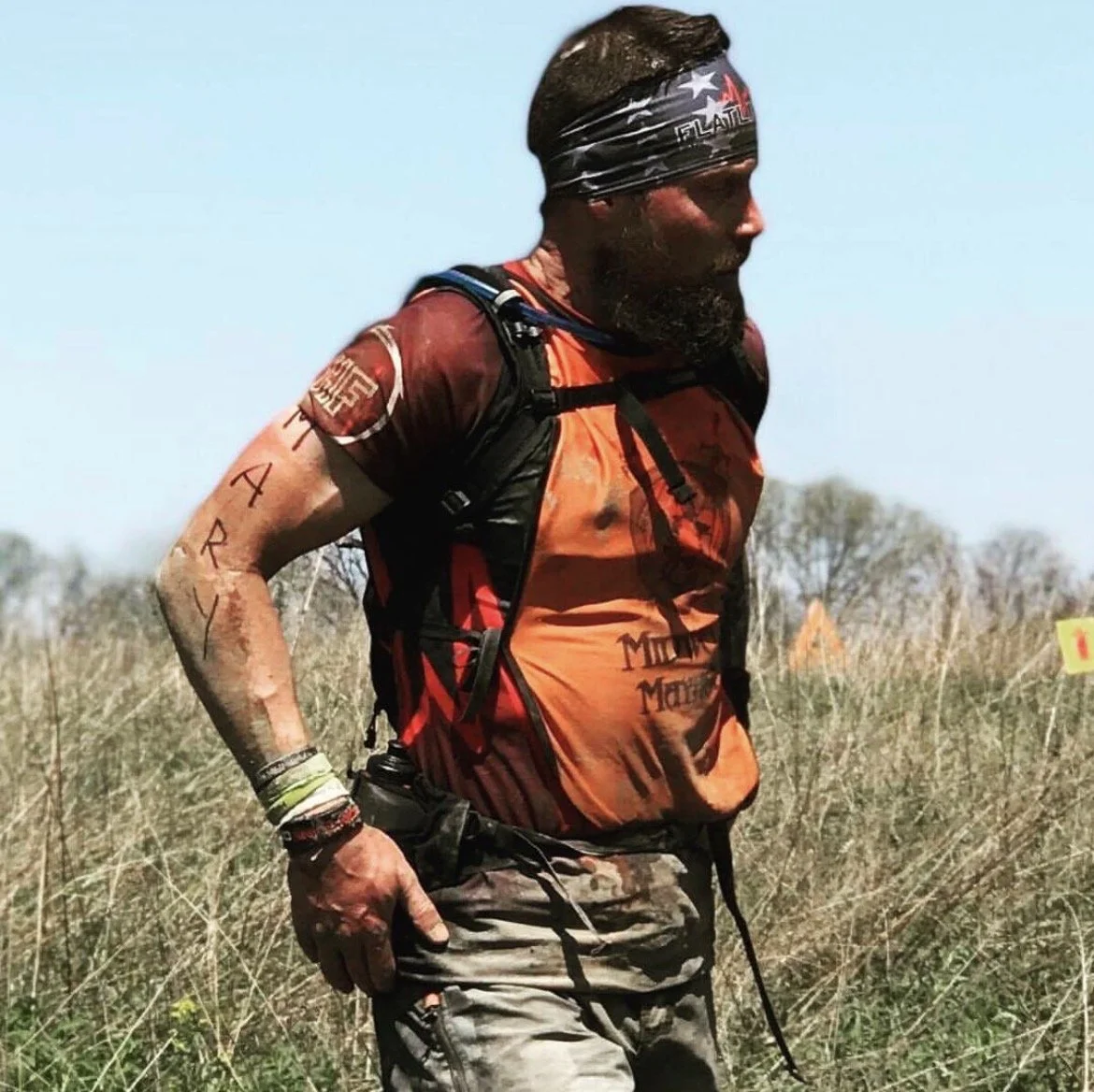
STOP SELLING “OCR”
I’ve been thinking about this a lot lately, especially after watching countless gyms that proudly advertised themselves as an OCR gym shut shut their doors, or seeing every CrossFit gym who used to “add on” OCR classes now “add on” HYROX classes. Every time something like that happens, everyone starts asking the same questions. Is OCR dying? Is the sport dead? Is nobody interested anymore? Personally, I think they’re asking the wrong question. I don’t think people stopped wanting what obstacle course racing actually provides. I think they stopped wanting what the acronym represents.
That’s an important distinction.
I’ve spent the better part of fifteen years building athletes around obstacle course racing, coaching it, racing it, dragging people into it kicking and screaming, and watching complete beginners become people they never thought they could become. OCR changed my life. It built a business. It introduced me to lifelong friends. It gave me stories I’ll be telling until I’m old enough that nobody believes them anymore. So this isn’t coming from someone who wants to distance himself from obstacle course racing. It’s coming from someone who loves it enough to admit we’ve done a spectacular job of confusing everyone about what it actually is.
Think about what happens when you tell someone you own an OCR gym. Half the people ask if that’s like American Ninja Warrior. The other half immediately picture Spartan Race. Somebody inevitably asks if they have to crawl through mud or get electrocuted, because apparently Tough Mudder’s marketing department did such a fantastic job convincing America that voluntary workplace safety violations were fitness. Before you’ve explained a single thing about what you actually teach, you’re already spending ten minutes undoing somebody else’s definition of those three letters.
Are their bands or burpees? And if there are burpees, what is the movement standard? And if it’s bands is it one band or three?
That’s a terrible place to start a conversation.
Then there’s HYBRID. I actually like hybrid training. We use it all the time. Running and strength belong together. The problem is that “hybrid” has become just as loaded as OCR. Depending on who you’re talking to, hybrid either means CrossFit for people that can’t do a proper wall ball shot, CrossFit without muscle-ups, CrossFit for people who don’t like Olympic lifting, or simply running between exercises. Nobody agrees on the definition anymore and whether HYROX or DEKA, both seem extremely determined to outperform OCR in their inability to properly staff a race or consistently enforce rules. It’s another word that’s accumulated so much baggage it spends more time creating confusion than clarity.
Meanwhile, we’ve quietly been doing something different this entire time.
The goal at HartFit has never been to produce obstacle racers. That’s simply one of the outcomes. The goal has always been to produce people who are more capable than they were yesterday. People who can carry awkward things without hurting themselves. People who don’t panic when they’re uncomfortable. People who can solve problems while they’re exhausted instead of immediately looking for the nearest folding chair. That’s a much bigger mission than preparing someone to ring a bell at the top of a rope climb.
The more I think about it, the more convinced I become that we’ve been describing ourselves wrong for years. We don’t train OCR. We don’t train HYBRID. We use both because they’re incredibly useful tools, but neither one is the mission. The mission is what I’ve started calling Controlled Adversity Fitness.
That isn’t some cute marketing slogan I came up with because consultants love inventing categories. It’s a description of exactly what happens every time someone walks through our gate. We intentionally expose people to manageable physical and mental challenges that force adaptation without crossing the line into stupidity. That’s important because our fitness industry has somehow managed to convince people there are only two options. Either exercise should be perfectly comfortable, climate-controlled and optimized down to your smartwatch telling you whether your breathing is sufficiently aerobic… or it should involve some influencer screaming at you while flipping tires until your spine files a complaint with HR. Neither one prepares you particularly well for real life.
The funny part is this isn’t even a new idea. Humans have been adapting to controlled adversity for literally hundreds of thousands of years. We just didn’t call it fitness because there wasn’t a need to. Life itself supplied enough adversity to keep everyone physically and mentally engaged. You carried water because you wanted to drink. You climbed because there was food or safety on the other side of whatever you were climbing. You walked because there wasn’t another option. You squatted because chairs weren’t exactly a hot commodity. Nobody tracked macros around a campfire or debated whether carrying a dead deer counted as Zone 2. You simply adapted because survival rewarded capable people and punished incapable ones. Modern life has done an incredible job removing almost every one of those demands, which is wonderful if your goal is convenience and absolutely terrible if your goal is remaining physically capable.
That’s where exercise came in, and to be fair, exercise has accomplished incredible things. We’ve become stronger, we’ve learned more about physiology than ever before, and sports science has given us a roadmap for improving nearly every measurable component of human performance. Progressive overload has been validated over and over again. Apply stress, recover from that stress, and the body comes back better prepared for the next exposure. Bones become denser. Tendons become stiffer. Muscles grow. Your heart pumps more efficiently. Your brain even gets better at recruiting muscle fibers because strength isn’t just about muscle tissue, it’s also about teaching your nervous system how to use what it already has. The science is remarkably clear. Human beings are adaptation machines.
What the science also tells us, though, is that adaptation isn’t limited to muscles. Psychologists have spent decades studying resilience, and one of the most consistent findings is that people don’t become mentally tougher by avoiding stress. They become mentally tougher by experiencing manageable amounts of it, recovering, then realizing they handled something they previously thought they couldn’t. Researchers sometimes refer to this as stress inoculation. It’s the same principle used in military training, emergency response, aviation, and countless other professions where performance under pressure actually matters. You don’t throw someone into complete chaos on day one. You expose them to increasing levels of challenge until competence replaces panic. That’s not abuse. That’s education.
Movement research points in the same direction. The body doesn’t become adaptable by repeating the exact same movement in the exact same environment forever. It becomes adaptable through variability. Uneven terrain. Different loads. Different grip positions. Different speeds. Unexpected transitions. Your brain is constantly building better movement solutions because it keeps encountering new problems to solve. Compare that to spending forty-five minutes staring at the same television while an elliptical trainer faithfully removes every meaningful decision from your workout. Efficient? Sure. Challenging? Maybe. Preparing you for anything outside that gym? Not especially.
That’s why I’ve never understood the obsession with making fitness as predictable as possible. We celebrate machines that eliminate balance. We design equipment that tells you exactly where your hands go. We spend thousands of dollars creating perfectly flat running surfaces inside climate-controlled buildings while simultaneously wondering why people’s backs hurt after carrying groceries or why they roll an ankle the second they step on an actual trail. We’ve become unbelievably good at exercising in environments specifically designed to remove the variables that make human movement valuable in the first place.
Controlled Adversity Fitness flips that philosophy upside down.
Instead of asking, “How can we make this exercise easier to perform?” we ask, “What adaptation are we trying to create?” Sometimes the answer is strength, so we’ll lift something heavy. Sometimes it’s endurance, so we’ll run. Sometimes it’s grip, balance, coordination, spatial awareness, or problem-solving under fatigue. Sometimes it’s simply teaching someone that being uncomfortable isn’t actually an emergency. The workout isn’t built around a piece of equipment. It’s built around a human adaptation.
That’s also why obstacle course racing fits so naturally into what we do. Notice I said fits into it. It isn’t the destination. It’s one of the best vehicles we’ve found for creating those adaptations because obstacles force your body and brain to work together in ways a barbell never can by itself. You have to think while you’re tired. Adjust while you’re moving. Make decisions while your heart rate is elevated. Fail, regroup, and immediately try again. That’s real life. Real life rarely asks whether you can bench press your bodyweight. It asks whether you can solve problems when you’re exhausted, frustrated, and wishing somebody else would handle it.
That’s the mission.
OCR just happens to be one of the best classrooms I’ve ever found for teaching it, and I was involved as a fitness professional for 10 years before I ever ran my first OCR.
The more I look around the fitness industry, the more I think we’ve all become obsessed with selling methods instead of outcomes. Every discipline believes its own logo is the answer. CrossFit has its methodology. Bodybuilding has its methodology. Powerlifting has its methodology. HYROX has its methodology. Running has its methodology. OCR has its methodology. Every camp insists they’ve figured out the secret while quietly pretending the others are missing something.
The truth is they’re all missing something because they’re all sports.
That’s not an insult. I love sports. But somewhere along the line, people started confusing being good at a sport with being prepared for life, and those aren’t remotely the same thing.
A marathon runner could cover twenty-six miles but struggle carrying an eighty-pound bag of concrete across a yard. A powerlifter could squat six hundred pounds and be completely humbled by climbing a rope. A bodybuilder could look like a Marvel superhero until he’s asked to jog two miles without negotiating with his lungs halfway through. CrossFit athletes are phenomenally fit, but put some of them on uneven terrain where movement quality matters more than barbell mechanics and suddenly all those perfect gym reps don’t always translate. The same goes for OCR athletes. I’ve watched obstacle racers who could fly across multi-rigs get dropped because they couldn’t carry anything heavy. Every sport develops incredible specialists.
Life couldn’t care less about specialists.
Life rewards versatility.
Nobody gets a text message saying, “Congratulations. Today you’ll only need your upper body.”
Nobody schedules emergencies around leg day.
Nobody politely waits until you’ve completed your deload week before asking you to move furniture, help after a car accident, carry your injured dog off a hiking trail, or spend twelve hours cutting up fallen trees after a windstorm. Real life has an incredible habit of throwing random physical problems at you without first checking whether they align with your current training block.
That’s why capability has always mattered more to me than performance.
Performance is what you can demonstrate inside the rules of a particular sport.
Capability is what remains when there are no rules.
Capability is adapting when the plan falls apart.
Capability is staying calm when something unexpected happens.
Capability is figuring out how to get over, under, around or through whatever obstacle life just dropped in front of you instead of standing there waiting for someone to explain the workout.
Ironically, that’s exactly what obstacle course racing was originally so good at teaching.
Not because of podiums.
Not because of medals.
Not because somebody got to call themselves elite on Instagram after finishing a race with seven participants.
It was because obstacles forced people to stop thinking like exercisers and start thinking like problem solvers.
Somewhere along the way, though, even OCR started drifting toward specialization. People wanted the fastest rigs. The hardest grip gadgets. More technical obstacles. More niche skills. More things that made you better at OCR instead of making OCR better at making you a more capable human being.
I understand why it happened. We definitely contributed to it ourselves. Every sport evolves. Every sport becomes more competitive. Every sport eventually begins rewarding specialization.
But that’s exactly why I don’t want to sell the sport anymore.
I want to sell what the sport was accidentally creating all along.
A more resilient person.
A more adaptable person.
A more useful person.
Someone who doesn’t immediately panic when things become physically uncomfortable because discomfort isn’t foreign anymore. It’s familiar. They’ve lived there before. They’ve solved problems there before. They’ve failed there before. More importantly, they’ve discovered failure usually isn’t fatal, despite what social media would have us believe every time somebody misses a pull-up.
That’s Controlled Adversity Fitness.
Not because adversity is somehow noble by itself. There’s nothing magical about suffering. Anybody can make someone miserable. That’s easy. Good coaches have been doing the opposite for years. They apply exactly enough challenge to force adaptation without breaking the person standing in front of them.
That’s where the word controlled matters.
Anyone can make a workout harder.
Very few people know how to make someone better.
Maybe Controlled Adversity Fitness never becomes a thing.
Maybe ten years from now everyone still argues about whether they’re a CrossFitter, a HYROX athlete, an obstacle racer, a bodybuilder, a runner or whatever new fitness label gets invented because apparently we can’t just exercise without forming another tribe.
That’s fine.
I’m not interested in winning an argument over terminology.
I’m interested in producing people who can handle life better because they chose to voluntarily do difficult things before life volunteered them.
I don’t particularly care whether someone ever signs up for a Spartan Race, a HYROX event or an ultramarathon. If they do, great. I’ll probably be there cheering them on or lining up beside them. But if the only thing they ever gain from training here is the confidence to hike that mountain they’ve always avoided, carry their kid without throwing out their back, help a neighbor after a storm, recover after falling down instead of staying there, or simply stop doubting themselves every time life gets uncomfortable, then we’ve already accomplished something far more valuable than another finisher medal hanging in a garage and a blue check mark next to your name because giving your social security number to Instagram makes you official.
That’s why I don’t want to sell OCR anymore.
I want to sell capability.
I want to sell confidence that has actually been earned instead of manufactured through motivational quotes and filtered Instagram videos.
I want to sell resilience that comes from experience instead of hashtags.
OCR.
HYBRID.
CrossFit.
Running.
Strength training.
They’re all just tools.
Good tools.
Useful tools.
But no carpenter ever framed a house because he loved hammers.
He loved what the hammer allowed him to build.
That’s how I look at obstacle course racing now.
I don’t love it because of the obstacles.
I love it because of the people it has the potential to create when it’s used correctly.
Maybe that’s been the answer all along.
Stop trying to convince people to love obstacle course racing.
Show them what becoming more capable feels like.
If we do that well enough…
The obstacles will take care of themselves.
WHILE EVERYONE IN CROSSFIT AND HYROX MEASURE THEIR D*#KS, OCR JUST WATCHES AND WAITS
Apparently HYROX isn’t real fitness.
I know this because a few CrossFit people have informed me personally and social media is rampant with CrossFit athletes making fun of HYROX.
And if there is one thing I’ve learned during my 20 plus years in the fitness industry, it’s that nobody is more qualified to determine whether your chosen method of exercise counts as fitness than someone who has made their chosen method of exercise their entire personality.
The argument seems to be that HYROX is basically CrossFit for people who can’t CrossFit.
Where are the muscle-ups?
Where are the handstand walks?
Where are the snatches?
Where are the cleans, jerks, butterflies, kipping, double-unders and seventeen other movements with names that make it sound like somebody is either exercising or ordering drinks at a bar?
I even heard somebody mention Ollies once.
I’m pretty sure that’s skateboarding, but at this point I’m afraid to ask.
Kidding.
The basic argument is that HYROX took all the scary stuff out of CrossFit, added a bunch of running and created a fitness competition for people who would rather push a sled than learn how to launch themselves over a pull-up bar like a salmon swimming upstream.
Therefore, CrossFit athlete = real athlete.
HYROX athlete = runner who occasionally touches weights.
Got it.
Many bodybuilders have their own version of this argument, of course.
Because if your shoulders don’t require a separate airline seat, apparently you haven’t been training hard enough.
They look at endurance athletes like we’re victims of some terrible wasting disease.
“Bro, you’re gonna lose all your muscle.”
Maybe.
But I can also walk up a flight of stairs without needing oxygen and a spotter.
So I guess we both made choices.
The funny thing is I’ve had members both of these groups wander into obstacle course racing over the years.
And I have learned some things.
Bodybuilders usually look fucking fantastic doing it.
For approximately eleven minutes.
Then the running starts adding up, the terrain stops cooperating, the carries start stretching out, the heart rate goes somewhere it has apparently never been invited before and suddenly that 500-pound deadlift isn’t providing nearly as much emotional support as expected.
But they still look great.
Just while failing obstacles and having their heart explode.
CrossFitters are different.
Usually they have plenty of strength.
Plenty of grip.
Plenty of conditioning.
On paper, they should absolutely destroy most obstacles.
Then they grab one.
And sometimes you can almost see the computer in their head searching for the movement standard.
“Where do my feet go?”
Wherever the fuck you need them to.
“But what is the prescribed movement?”
There isn’t one.
“Do I lock out?”
I don’t know, Chad. The bell is thirty feet over there. Figure it out.
That’s where OCR gets interesting.
Obstacles don’t give a shit about your movement standards.
There is no judge standing underneath the rig telling you that your rep counted.
There isn’t necessarily one correct technique.
You have to understand how your body moves through space.
Momentum.
Timing.
Hips.
Grip.
Swing.
Rotation.
Efficiency.
Sometimes brute strength.
Sometimes absolutely anything except brute strength.
I’ve watched incredibly strong athletes attack obstacles like they’re trying to tighten a bolt with their entire body.
Everything is rigid.
Everything is mechanical.
Every muscle is working.
And somehow they’re barely moving.
Meanwhile some 145-pound OCR athlete swings through the same obstacle looking like a drunk chimpanzee and rings the bell ten seconds later.
That’s a skill.
And this is where the whole fitness argument starts becoming ridiculous to me.
Because I actually respect CrossFit.
I respect HYROX.
I respect bodybuilding.
I respect powerlifting.
I respect running.
I respect Ninja.
I respect people training for a 5K and people training to pick up something that weighs three times what they do.
They’re different disciplines requiring different adaptations.
Which should be obvious.
Yet fitness has somehow become one gigantic pissing match where everybody needs their thing to prove that everybody else’s thing isn’t real fitness.
CrossFit people shit on HYROX because the movements aren’t technical enough.
Bodybuilders shit on endurance athletes because they’re too small.
Runners think lifters can’t run.
Lifters think runners are allergic to muscle.
HYROX athletes are probably too busy posting pictures next to the wall with their finishing time to notice any of this.
And OCR?
Most everyone thinks OCR is basically a bachelor/ bachelorette party “mud run” or something so insignificant, even those who used to be highly involved in it hide their previous OCR dedication from everyone the same way you’d hope your wife, husband or boss never sees those photos of that stripper on a pole and your missing pants.
Many of them having to leave the sport due to injury they’ll blame on OCR, but honestly had more to do with going full steam into a variety of fitness trends and programs all at once, with OCR getting the blame because it’s the style of fitness that exposed the foundation that was overworked and crumbling.
OCR is sitting over in the corner like the kid nobody invited to the argument.
Which I find fascinating.
Because if we’re actually discussing building a broad fitness repertoire, obstacle course racing should probably enter the conversation occasionally.
The whole idea of “HYBRID” is supposed to be a mixed bag of many disciplines, yet somehow it becomes extremely ridged when mixing in hitting some bells that aren’t just a novelty item at the end of a DEKA.
Which apparently wasn’t even necessary to hit.
In OCR you have to run.
Sometimes uphill.
Sometimes downhill.
Sometimes on trails that look like God spilled a box of rocks down the side of a mountain.
You have to carry things.
Climb things.
Pull things.
Hang from things.
Jump over things.
Crawl under things.
Move your body through things.
Control your heart rate enough to transition from running into a technical obstacle and then immediately start running again.
And you don’t get to choose when your favorite type of fitness shows up.
That’s the part I love.
OCR doesn’t really care what you’re good at.
It eventually finds what you’re bad at.
The runner discovers the bucket carry.
The lifter discovers mile seven.
The bodybuilder discovers that lats the size of garage doors don’t automatically create obstacle technique.
The CrossFitter discovers there isn’t always a movement standard.
And the OCR athlete discovers that being mediocre at twelve different things is occasionally a pretty useful superpower.
That’s why I’ve never understood why OCR isn’t brought into these conversations more often.
Not because I think OCR is the superior form of fitness.
That’s literally the mentality I’m making fun of.
I just think there’s tremendous value in occasionally leaving the environment where you’re the expert and walking into one where your strengths don’t guarantee success.
Go do CrossFit.
Go race HYROX.
Go train with a bodybuilder.
Go run a half marathon.
Go try Ninja.
And yes, come run an obstacle course.
You might discover something missing from your fitness that your preferred discipline never asked you to develop.
Or we can continue doing what the fitness industry does best.
Stand around arguing about whose workouts are harder, whose athletes are more legitimate and whose dick is bigger.
Personally, I’d rather see who can get over themselves faster than they can get over a wall.
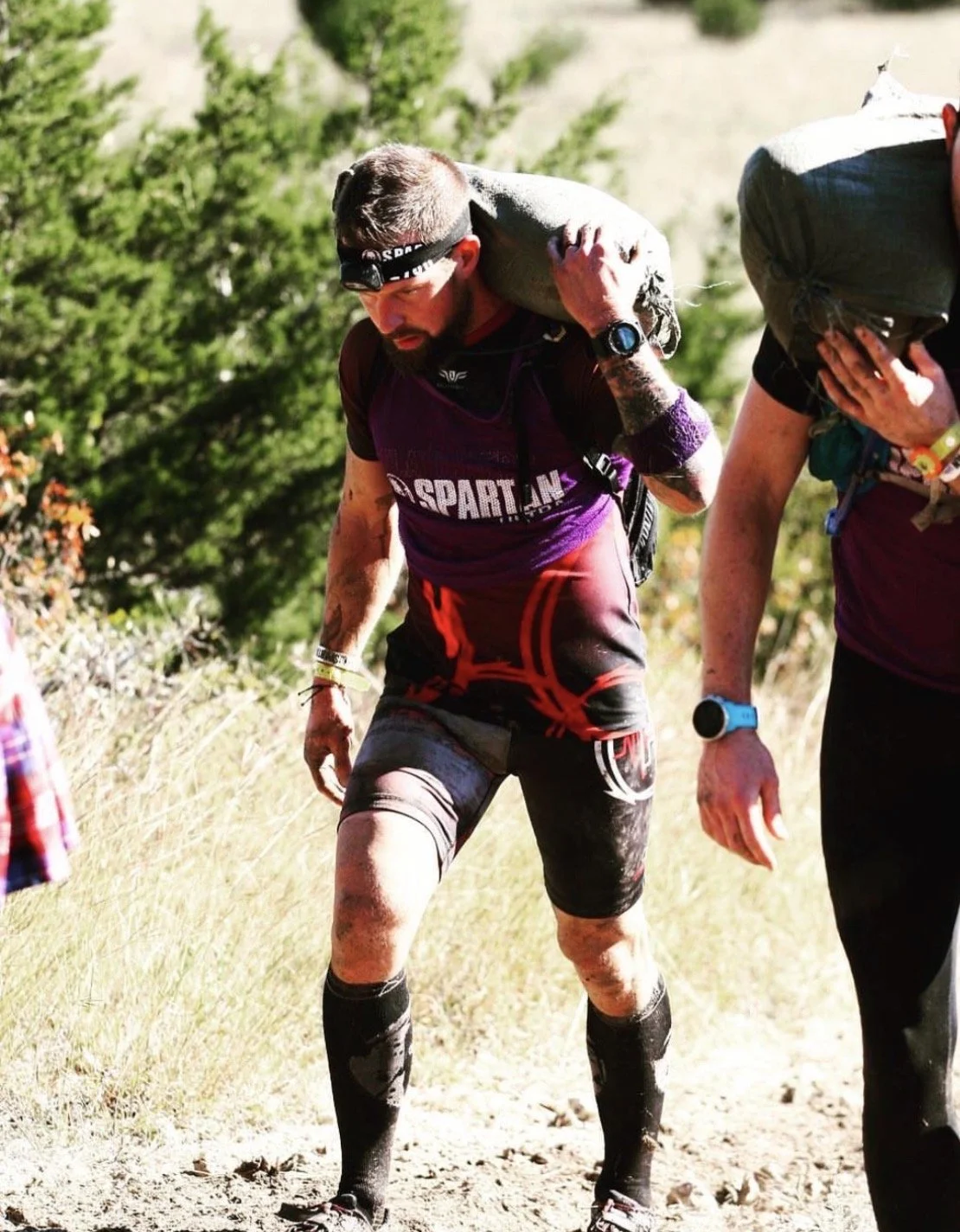
OCR NUTRITION: FUELING FOR DISTANCE, TERRAIN AND ALTITUDE.
One of the biggest mistakes I see in obstacle course racing is athletes treating nutrition like it’s the same race every weekend. A Sprint isn’t a Beast. A Beast isn’t an Ultra. Yet far too many people eat the exact same breakfast, throw the same gel in their pocket, and hope fitness covers the difference. Sometimes it does. Most of the time, it doesn’t. You don’t fuel a 45-minute race the same way you’d fuel something that could keep you on the mountain for eight or nine hours.
For shorter races like a Sprint or Super, your nutrition should be about showing up with full glycogen stores rather than trying to eat your way through the race. If you’ve eaten well the day before and had a solid breakfast a couple of hours before the start, you probably don’t need much beyond water and maybe a small amount of carbohydrate if you’re pushing the front of the field. More people have ruined a Sprint by stuffing themselves with energy products than by running out of fuel.
Once you move into Beast territory, the conversation changes. Glycogen becomes a limited resource instead of something you can ignore. Waiting until you’re hungry is already too late. Small amounts of carbohydrates throughout the race—whether that’s gels, chews, drink mix, or real food you’ve trained with—can help keep both your legs and your brain working when fatigue starts making simple obstacles feel impossible. OCR isn’t just an endurance event. It’s a decision-making event. Miss one hand placement because your mind is foggy, and you can throw away minutes instead of seconds.
Then there’s the Ultra, where nutrition almost becomes another discipline entirely. The strongest athletes don’t just manage pace. They manage calories, hydration, electrolytes, and stomach comfort for hours. Eating a lot at one aid station rarely works. Consistently eating small amounts before you feel depleted usually does. Every Ultra athlete eventually learns the same lesson: the race isn’t won by whoever can suffer the most. It’s often won by whoever can keep eating.
Altitude changes the equation even more. Here in Colorado, your body loses fluid faster than most people realize because every breath carries away more moisture in the thinner, drier air. Even when you don’t feel sweaty, you’re dehydrating. Your heart rate climbs faster, perceived effort increases, and many athletes notice their appetite disappears despite burning more energy. That’s a dangerous combination. If you’re traveling from sea level, you can’t just copy what worked back home. Hydration needs to start days before the race, electrolytes become even more important, and carbohydrate intake often matters more because your body relies more heavily on it when oxygen availability drops.
The other mistake I see is athletes experimenting on race day. New gels. New hydration mixes. Energy drinks someone handed them at the expo. OCR already throws enough variables at you with weather, terrain, obstacles, and elevation. Your nutrition shouldn’t be another unknown. Whatever you plan to eat during a race should have already survived your long runs and training sessions. Training your stomach is just as important as training your grip.
Fitness gets you to the start line. Nutrition often determines whether that fitness is still there at the finish. If you’re preparing for obstacle course racing, stop asking what everyone else eats and start asking what your body performs best on over the exact distance, terrain, and elevation you’re about to face. That’s where real race-day nutrition begins.
One thing I tell every athlete who comes to a HartFit OCR PULSE Simulation is to treat it like a race, because that’s exactly what it is. If you’re showing up for a 5:30 class after sitting at work all day without eating since lunch, don’t be surprised when your energy disappears halfway through. A light meal containing carbohydrates and some protein two to three hours beforehand is usually plenty for most athletes. If you’re training early in the morning, something simple like a banana, toast with peanut butter, or oatmeal an hour before can go a long way without leaving you feeling heavy.
The bigger point is consistency. OCR PULSE is where you figure out what works before race day. Test the breakfast you’re planning to eat before your next Spartan. Practice the hydration strategy you think you’ll use during your Beast. Find out whether that energy gel actually sits well in your stomach while you’re carrying a bucket uphill or hanging from a rig. Training isn’t just about building fitness. It’s about removing uncertainty.
Because our simulations combine running, carries, grip obstacles, climbs, and repeated transitions, they expose nutrition mistakes quickly. Athletes who underfuel often find their grip fading sooner, their decision-making slowing down, and their pace dropping off long before their fitness should. Those who arrive properly fueled are able to focus on executing obstacles instead of simply trying to survive the workout.
The goal isn’t to leave HartFit wondering if you can finish a race. The goal is to leave knowing exactly how your body responds to the food, fluids, and fueling strategy you’ll rely on when the starting horn goes off. Every OCR PULSE Simulation is another opportunity to dial that in before the result actually matters.
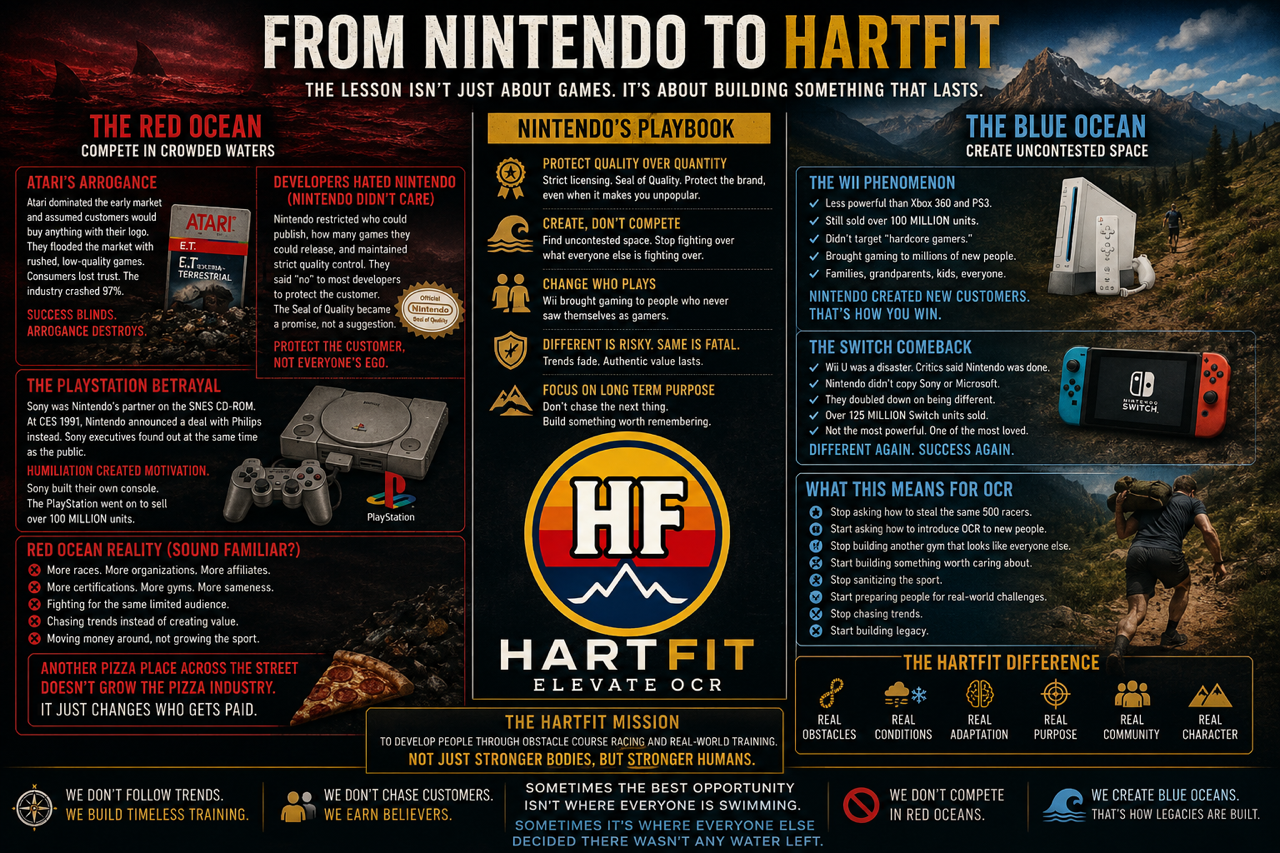
WHAT NINTENDO CAN TEACH US ABOUT SAVING OCR
I love Nintendo.
Not just because I grew up playing it, although I probably spent enough hours on Super Mario Bros. Zelda, Contra,and Mega Man to make my parents question every life decision they’d made up to that point.
Don’t worry, I’d soon make them question even more.
I love Nintendo because I genuinely think they pulled off one of the greatest business recoveries in modern history, and almost nobody outside of business schools ever talks about it.
The funny thing is, when people think of Nintendo today, they think of Mario, Pokémon, Zelda, and a company that’s been wildly successful for forty years. What they don’t think about is that Nintendo walked into an industry that had essentially committed suicide.
The video game crash of 1983 wasn’t a slowdown. It wasn’t a recession. It wasn’t a couple companies having bad years. The North American video game market went from an estimated $3.2 billion in annual revenue in 1983 to roughly $100 million just two years later. Ninety-seven percent of the market evaporated. Imagine waking up tomorrow and discovering that 97% of CrossFit affiliates had closed, HYROX couldn’t fill a single heat, and every supplement company was liquidating inventory for pennies on the dollar. That’s what the video game industry looked like.
Why did it happen?
Greed.
It’s almost always greed.
Everyone wanted in because everyone saw easy money. Atari had become a household name. Home consoles were exploding. Investors wanted returns. Developers wanted contracts. Retailers wanted inventory. Suddenly there were dozens of companies pumping out games as fast as they possibly could. Quality became secondary to volume because somebody somewhere convinced themselves that if they could just get another cartridge on a shelf before Christmas, people would buy it.
Sound familiar?
OCR had its boom too.
Race series were popping up everywhere. Every few months someone announced the next organization that was going to “change the sport forever.” Certifications started multiplying. Every gym with a pull-up rig suddenly became an OCR training facility. People who’d run a handful of races were suddenly experts. Somewhere along the way, obstacle course racing stopped being about obstacle course racing and started becoming another business opportunity.
That’s usually the beginning of the end.
People love blaming E.T. for the video game crash. It’s become one of those stories everybody repeats because it’s simple. Atari rushed an E.T. game into production in about five weeks, it was terrible, millions of cartridges went unsold, and eventually they buried truckloads of them in a New Mexico landfill. Great story. Makes for a fantastic documentary.
The problem is, it wasn’t true.
Well…it was true, but it wasn’t the reason.
E.T. didn’t kill the industry. It simply became the poster child for what the industry had already become. There were hundreds of mediocre games flooding the market. Consumers had stopped trusting publishers. Retailers couldn’t tell the difference between quality and garbage because everyone claimed their game was revolutionary. E.T. just happened to be the most famous train wreck.
Again…sound familiar?
Atari Didn’t Kill Video Games. Success Did.
Take notes, Spartan.
By the early 1980s Atari had become so dominant that they stopped behaving like a company trying to earn customers and started behaving like a company that assumed customers would never leave. That’s a dangerous place for any business to be. When you’re first, when you’re biggest, and when money is pouring in faster than you can count it, it’s easy to convince yourself that every decision you make is the right one simply because you’re the one making it.
Instead of protecting the customer, Atari started protecting quarterly profits. Games were rushed through development because Christmas deadlines mattered more than quality. Third-party publishers were springing up everywhere because everyone wanted a piece of the gold rush. Shelves became flooded with games that looked interchangeable, played terribly, and existed for one reason—to separate parents from their money before they knew any better.
Consumers eventually figured it out.
Funny how that works.
People will tolerate being taken advantage of exactly once before they stop trusting the entire industry. They don’t usually punish just the bad companies. They punish everyone. That’s exactly what happened. Retailers couldn’t tell which games were worth stocking anymore because there were simply too many. Customers couldn’t tell which games were worth buying because every box promised the next revolutionary experience. Eventually they just stopped buying altogether.
I’ve seen this movie before.
OCR exploded because it was different. Then organizations multiplied. Race directors multiplied. Coaches multiplied. Certifications multiplied. Every few months another person was announcing they’d figured out the future of obstacle course racing. Somewhere along the way the goal shifted from building something worth participating in to simply getting another logo into the marketplace.
Industries almost never collapse because one company makes one terrible decision.
They collapse because everybody starts believing that success is permanent.
Here’s where Nintendo did something brilliant that almost nobody talks about.
They didn’t walk into America after the video game crash and try convincing everyone that video games deserved another chance. That would’ve been a losing battle before it even started. Consumers had already made up their minds. Retailers had been burned by mountains of worthless inventory. The phrase “video game” itself had become associated with cheap products, broken promises, and an industry that had nearly collapsed under its own greed.
So Nintendo stopped selling “video games.”
Not literally, of course, but psychologically.
They called it the Nintendo Entertainment System, not a video game console. The cartridges became Game Paks. The console became a Control Deck. The machine itself was designed to look more like a VCR than a toy sitting on a child’s bedroom floor. They even bundled R.O.B., a goofy little robot that honestly wasn’t all that useful, because toy stores were still willing to stock toys while wanting absolutely nothing to do with video games. Nintendo understood that their biggest challenge wasn’t building a better product. Their biggest challenge was getting people to give the product a chance before dismissing it because of what they thought it was.
I think obstacle course racing is facing the exact same problem today.
The second people hear “OCR,” most already have an opinion. They picture mud runs. They picture electric wires, costumes, people climbing over walls for social media photos, or a niche sport filled with athletes they assume they’ll never be able to keep up with. Before they’ve ever touched a rig or carried a bucket, they’ve already decided it isn’t for them.
The frustrating part is that OCR isn’t really what we’re selling.
We’re selling stronger bodies that can hike fourteeners without falling apart halfway up the mountain. We’re selling confidence to tackle things people once believed were impossible. We’re selling grip strength that carries over into everyday life, better balance as people age, cardiovascular endurance, resilience, problem solving under fatigue, and the simple satisfaction of discovering that your body is capable of far more than you’ve been told.
The obstacles are simply the classroom where those lessons happen.
Maybe that’s where our marketing has gone wrong. We’ve spent years trying to convince people they should love obstacle course racing, when maybe obstacle course racing shouldn’t be the headline at all. Maybe it’s time to stop asking people if they want to train for OCR and start asking them if they want to become more capable human beings. Do they want to climb mountains? Carry their grandchildren? Lose weight without staring at another treadmill? Build confidence by accomplishing things they never imagined they could do?
If the answer is yes, they’re already looking for what OCR provides.
They just don’t know it yet.
That’s exactly what Nintendo understood. They didn’t change what was inside the box. Super Mario Bros. was still a video game. Duck Hunt was still a video game. The experience never changed. What changed was the invitation. They removed the label that carried all the baggage and let people experience the value before asking them to embrace the category.
I honestly believe obstacle course racing needs to do the same thing if it ever wants another real growth cycle. We don’t need to hide what OCR is, and we certainly shouldn’t be ashamed of it. But maybe we need to stop leading with the three letters that already have a preconceived meaning attached to them. Build capable people. Build stronger hikers. Build resilient parents. Build mountain athletes. Build everyday humans who can actually use the bodies they spend so much time trying to improve.
Then, once they’re hooked, they’ll realize they’ve been training for OCR all along.
Nintendo didn’t save video games by selling more video games.
They saved them by giving people a reason to care before they ever realized they were buying one.
Maybe that’s exactly what obstacle course racing needs to do next.
So why am I talking about Nintendo?
Because I don’t think Nintendo became Nintendo because they made better video games.
That’s certainly part of the story, but I don’t think it’s the reason they’ve managed to stay relevant for over 140 years as a company and nearly forty years in the modern gaming industry.
I think they understood something that almost every successful company eventually forgets.
You don’t always have to chase the market.
Sometimes you create one.
That’s a completely different philosophy than what most businesses are taught today. Every business podcast tells you to pivot. Every consultant tells you to follow consumer demand. Every marketing guru tells you to look at what’s trending, study your competitors, and find out what customers are buying before deciding what you should build.
Then five years later they all wonder why every company looks exactly the same.
If everybody is following the same map, eventually everybody ends up standing on the same piece of ground, fighting over the same customers while convincing themselves that changing the paint color on the walls somehow makes them different.
Business people eventually gave this a name.
The Red Ocean.
Everybody swimming in the same water, fighting over the same fish until eventually there’s not enough left for anybody.
Nintendo looked at what Sega was doing. Then Sony. Then Microsoft. Every generation became another technology race. Faster processors. Better graphics. More memory. Online gaming. Blu-ray. 4K. Ray tracing. Teraflops. Every company trying to convince consumers that this year’s machine was worth buying because it had more of something than last year’s machine.
Nintendo never really seemed all that interested.
Instead of asking, “How do we beat PlayStation at being PlayStation?” they asked a much more interesting question.
“What if we stopped competing with them altogether?”
That philosophy gave us the Wii.
On paper, the Wii should’ve been destroyed.
The Xbox 360 was significantly more powerful. The PlayStation 3 wasn’t even playing the same game technologically. Reviewers obsessed over graphics comparisons, processing power and hardware specifications. If the internet had existed in its current form back then, YouTube would’ve been filled with side-by-side videos explaining why Nintendo was finished.
Instead, Nintendo sold over 100 million Wii consoles.
Not because they convinced PlayStation owners to switch.
Not because Xbox players suddenly cared less about graphics.
They sold them because they found millions of people who had never owned a console in the first place.
Grandparents bought Wiis.
Parents bought Wiis.
Retirement homes bought Wiis.
Physical therapy clinics bought Wiis.
Families that hadn’t touched a controller in twenty years suddenly had one sitting in the living room because Grandma could bowl with her grandchildren without needing to know what a graphics card was.
That’s the part that fascinates me.
Nintendo didn’t win by stealing customers.
They won by creating entirely new ones.
Most businesses never think that way.
They’re too busy trying to convince someone to leave the gym across town, switch insurance companies, buy coffee somewhere else, or race somebody else’s event instead of theirs.
They’re not creating demand.
They’re redistributing it.
And I think OCR has spent years making exactly that mistake.
Instead of asking, “How do we introduce obstacle course racing to people who’ve never even considered trying it?” we’ve spent an awful lot of time asking, “How do we convince the same five hundred people to come race with us instead of the other organization this weekend?”
Those are completely different conversations.
One grows a sport.
The other just shifts money from one cash register to another.
It’s like opening another pizza place across the street from three existing pizza places and acting like you’ve revolutionized the restaurant industry because twenty people decided to buy pepperoni from you instead of the guy next door.
Congratulations.
You didn’t create new pizza lovers.
You just changed whose register the money went into Friday night.
I see the same thing happening throughout fitness.
Another HYROX affiliate opens.
Another DEKA affiliate announces itself.
Another “functional fitness” gym appears with black walls, turf, sleds, LED lighting, motivational quotes painted on concrete, and social media videos in slow motion where somebody dramatically claps chalk into the air while cinematic music tells you they’re changing lives.
Everybody claims they’ve reinvented fitness.
Then you walk inside and realize they’re all selling the same thing with a different logo.
That’s never interested me.
It still doesn’t.
People ask us all the time why we don’t pivot. Why not become another HYROX gym? Why not lean harder into DEKA? Why not become a ninja facility? Why not make OCR a tiny piece of what we do instead of the foundation?
Because somebody has to keep building the thing that made a lot of us fall in love with this in the first place.
Obstacle course racing wasn’t designed to be sanitized. It wasn’t meant to happen under perfect lighting, climate control and Bluetooth speakers while you rotate neatly between stations on rubber flooring.
It was messy.
It was uncomfortable.
It taught people how to solve problems while exhausted, not just repeat movements while fresh.
It forced you to carry awkward objects because life has never once handed anyone a perfectly balanced Olympic barbell with knurling placed exactly where you’d like it.
It forced you to think when your heart rate was through the roof. It forced you to adapt when the obstacle in front of you wasn’t the obstacle you expected. It rewarded patience just as much as strength and punished ego just as quickly as poor preparation.
Somewhere along the way, we started trying to make OCR look like everything else.
Maybe that’s exactly backwards.
Maybe the thing that made obstacle course racing valuable was the fact that it wasn’t everything else.
That’s why we built HartFit the way we did.
Could we have poured concrete across the property? Absolutely.
Could we have lined the place with treadmills, mirrors and rows of machines? Of course.
Could we have painted everything black, hung neon lights from the ceiling and blasted electronic music until people confused sensory overload with intensity?
Probably.
It also would’ve made us look like thousands of other facilities.
Instead we searched for altitude.
We left the grounds technical and challenging.
We built obstacles.
We left Colorado exactly the way Colorado is because race day doesn’t care whether you trained in seventy-two degrees with perfect lighting.
Some days the wind tries to blow you into Kansas.
Some days it’s snowing sideways.
Some days you’re baking in ninety-five degrees wondering why you thought this sounded like fun.
Good.
That’s reality.
Reality doesn’t ask whether you’re comfortable before handing you a challenge, and neither should training.
Does that mean we’ll probably always be smaller than businesses chasing whatever the newest fitness trend happens to be?
Maybe.
I’m perfectly okay with that.
Nintendo proved something that I think gets overlooked because everyone focuses on Mario instead.
Being different is always risky.
Being the same is eventually fatal.
I’d rather spend the next twenty years building something a thousand people genuinely believe in than spend the next five chasing ten thousand people who’ll disappear the moment somebody else invents the next shiny object.
Because that’s what trends do.
They change.
Algorithms change.
Marketing changes.
Fitness changes.
The people who spent the last decade telling you CrossFit was the only answer eventually told you functional fitness was the only answer. Now they’re telling you Zone 2 is the only answer. Give it another five years and they’ll discover another revolutionary concept that somehow requires buying another certification.
Meanwhile, carrying something heavy up a hill still matters.
Climbing a rope still matters.
Getting yourself over a wall still matters.
Learning to think clearly when your lungs are on fire and your heart rate is pushing 180 still matters.
Those aren’t trends.
They’re human capabilities.
Those are worth preserving.
Maybe that’s our Blue Ocean.
Not because it’s easy.
Not because it’s the biggest market.
But because almost everybody else looked at that water and decided there wasn’t enough left to fight over.
History has a funny way of rewarding the people willing to swim where everyone else stopped looking.
So come on in.
The water is perfect.
WHY HARTFIT MAY WALK AWAY FROM SPARTAN DEKA
When we became one of the earliest DEKA Affiliates in Illinois, it wasn’t because we thought DEKA would make us rich.
It was because we believed in what it represented.
We were already deeply invested in obstacle course racing. Spartan was a major part of our culture. Our athletes raced Spartan. We coached Spartan. We built a community around the principles OCR was supposed to teach: resilience, accountability, problem-solving, and overcoming adversity.
At the time, another gym just a few miles away had chosen to affiliate with HYROX. Rather than competing for the exact same audience, we made what we believed was a respectful decision.
They would offer one lane.
We would offer another.
Athletes would have options, both businesses could thrive, and everyone would benefit.
Shortly afterward, I received calls from both Yancy Culp and Jarrod Cogswell informing me that the competing gym had reached out about becoming a DEKA Affiliate as well.
The answer was no.
For the first time in all my years associated with Spartan, I saw leadership willing to protect the integrity of what they were building rather than simply chasing the next affiliate fee. The gym attempting to affiliate was substantially larger than ours. They could likely have generated more revenue. Yet Spartan chose to honor the commitment they had already made.
That mattered.
It showed character.
Unfortunately, that philosophy didn’t last.
Over time, DEKA began expanding aggressively. The idea of protecting affiliates from direct local competition slowly disappeared. Facilities began appearing closer and closer together. The same consideration that once existed was replaced by a strategy that seemed focused primarily on growth.
Whether that growth benefits affiliates is another question entirely.
Our first indication that things were changing is when we received emails from HYROX, whom we previously affiliated with, that we could not use the term HYROX in any of our training language.
We obliged albeit confused why DEKA was not implementing the same strict protection of their brand competing gyms used their logos and literature on theirs.
We soon learned why.
When we decided to leave Illinois and move to Colorado, continuing as a DEKA Affiliate was not an automatic decision.
Unlike most gyms, our primary focus has always been OCR.
That meant when searching for property, we weren’t looking for the perfect DEKA venue. We were looking for the perfect OCR venue. We needed terrain. Obstacles. Space. Character. Elevation. The things that make OCR what it is.
Yet we still considered DEKA heavily enough that “flat enough to host DEKA” became one of the criteria in our search.
That came at a cost.
To DEKA’s credit, they worked with us during the transition and gave us time while we prepared the property. We appreciated that.
But as the months passed, the economics became harder to justify.
Affiliate fees increased.
Revenue sharing changed.
Additional services were bundled into memberships despite many affiliates never asking for them.
At the same time, standards appeared to loosen.
Gyms that didn’t possess all of the required equipment were permitted to affiliate. Workarounds and substitutions became acceptable. The barriers to entry that existing affiliates had already paid to overcome suddenly seemed less important.
As one of the few dedicated OCR facilities in America, forgive me if I struggle to sympathize with arguments about startup costs.
We built obstacles.
We purchased land.
We developed infrastructure.
We created an outdoor training environment from nothing.
Not because someone subsidized it.
Not because a governing body gave us special treatment.
But because we believed in what we were building.
That’s what makes this decision difficult.
The challenge isn’t whether DEKA is a good product.
It is.
The challenge is whether it still aligns with the future we envision for HartFit.
Our first DEKA event in Colorado has struggled. Participation has been lower than expected. Interest in hybrid racing appears increasingly fragmented. New affiliates continue appearing. More events compete for the same athletes. The market feels saturated while enthusiasm becomes diluted.
At the same time, OCR continues to lose ground.
The very sport that built our community now fights for attention against a growing list of fitness products, brands, and formats.
And if I’m being honest, that’s the part that weighs on me most.
Not the affiliate fees.
Not the equipment.
Not the logistics.
The reality that every hour, dollar, and ounce of energy we invest into promoting DEKA is energy not invested into rebuilding OCR.
The sport that gave many of us purpose.
The sport that taught people they were capable of more than they believed.
The sport that transformed lives long before hybrid racing became fashionable.
Maybe DEKA remains part of our future.
Maybe it doesn’t.
What I do know is this:
HartFit was never built to follow trends.
It was built to develop resilient human beings through challenge, adversity, and achievement.
Whether that happens through OCR, DEKA, hybrid racing, or something entirely our own remains to be seen.
But if we move forward, it will be because the path strengthens our mission—not because it strengthens someone else’s bottom line.
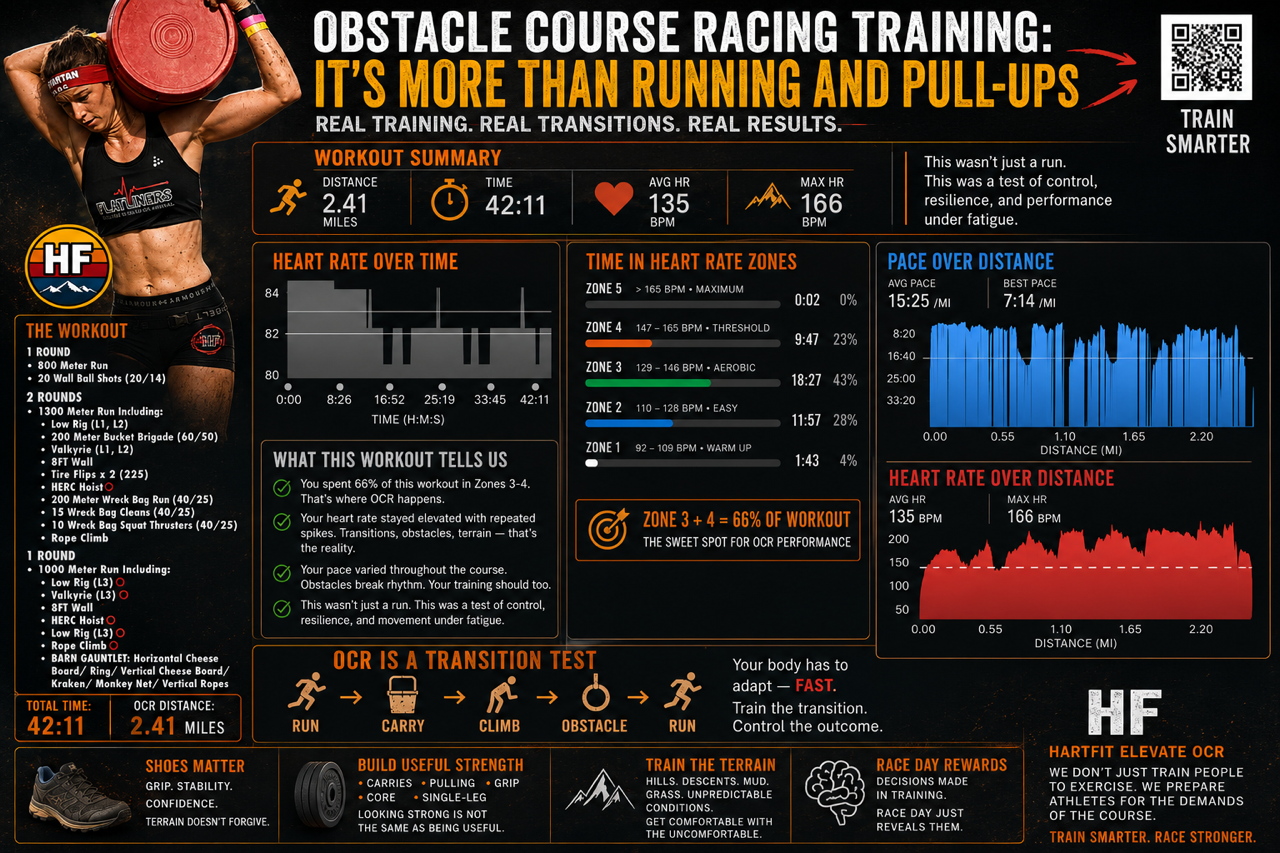
OCR TRAINING: THE SCIENCE OF TRAINING FOR THE UNEXPECTED
One of the biggest mistakes athletes make when preparing for obstacle course racing is assuming OCR is simply running with a few obstacles thrown in the middle.
Run more miles.
Do more pull-ups.
Lift heavier.
Grip harder.
Sounds good on paper.
Then race day comes.
Your heart rate is through the roof, your legs are destroyed from climbs and carries, your hands are gone, and suddenly that obstacle you can easily complete fresh in training feels impossible.
That’s because OCR isn’t just a fitness test.
It’s a transition test.
It’s a test of how well your body can move between different demands while managing fatigue, terrain, heart rate, and decision making.
Understanding Your Heart Rate Zones for OCR
One of the biggest missing pieces in OCR training is understanding intensity.
Not every workout should leave you crawling to your car.
And not every run should be the same comfortable pace you’ve done for years.
Different heart rate zones create different adaptations.
Zone 2: Building Your Engine
Zone 2 training is where a large portion of endurance development happens.
This is your conversational pace. You’re working, but you’re controlled.
The goal is to improve:
• Aerobic capacity
• Fat utilization
• Recovery ability
• Overall endurance
A lot of OCR athletes skip this because it doesn’t feel “hard enough.”
They want sweat.
They want suffering.
They want to post the destroyed selfie afterward.
But a bigger engine allows you to race harder for longer.
The athletes who can keep moving late in a Beast, Ultra, or endurance race usually aren’t magically tougher.
They built the foundation.
Zone 3: The OCR Reality Zone
Zone 3 gets interesting because this is where a lot of OCR actually happens.
You’re running.
You hit a sandbag carry.
You climb.
You descend.
You attack an obstacle.
You get moving again.
You aren’t comfortably jogging anymore, but you also aren’t completely redlining.
The problem?
A lot of athletes accidentally live here.
Every run becomes kind of hard.
Every workout becomes kind of hard.
Hard enough to create fatigue.
Not focused enough to create the adaptation they’re actually looking for.
Zone 3 has value, but it needs a purpose.
Zone 4: Learning to Perform Under Pressure
This is where OCR separates itself.
Anyone can do monkey bars fresh.
Can you do them after a hard climb?
After a bucket carry?
After your heart rate spikes?
Zone 4 training teaches your body to work near threshold and still execute.
This is where we spend time during OCR simulations because racing doesn’t care what you can do when conditions are perfect.
Your grip doesn’t fail because you weren’t strong enough.
Many times it fails because you never trained your body to control breathing, technique, and movement while your heart rate was screaming.
Stop Training Obstacles Like They’re Separate From Racing
This is one of the biggest misunderstandings in OCR.
People practice obstacles like they’re at a playground.
Walk up.
Shake out the arms.
Chalk up.
Talk for a minute.
Attempt obstacle.
That’s not racing.
In a race, you arrive already compromised.
At HartFit ELEVATE OCR, we train the transition.
Run into obstacles.
Carry into obstacles.
Elevated heart rate into technical movement.
Because the obstacle isn’t the challenge.
The condition you reach the obstacle in is the challenge.
Shoes Matter More Than People Think
OCR happens on unpredictable terrain.
Grass.
Mud.
Rocks.
Hills.
Loose dirt.
Wet obstacles.
Your normal road running shoes usually aren’t built for that environment.
A good OCR/trail shoe should provide:
• Aggressive grip
• Stability on uneven terrain
• Drainage
• Confidence descending hills
• Protection without being overly bulky
If you’re sliding everywhere, every step costs more energy.
That matters.
A race isn’t just won by who has the biggest engine.
Efficiency matters.
Strength Training: Build Useful Strength
OCR athletes don’t need to train like bodybuilders.
Looking strong and being useful under fatigue are not the same thing.
Your body needs:
• Carry strength
• Pulling strength
• Grip endurance
• Core stability
• Single-leg strength
• Mobility
• Durability
A heavy bucket carry doesn’t care about your perfect gym environment.
A rig doesn’t care about your biceps pump.
OCR rewards athletes who can use their strength.
Train for the Race You’re Actually Doing
A 3K OCR championship race is not the same as a Spartan Ultra.
A mountain Beast is not the same as a flat sprint.
A mandatory completion obstacle course is not the same as a penalty loop race.
The training should match the demand.
More isn’t always better.
Better is better.
Build the Complete Athlete
Obstacle course racing is one of the most unique sports because it exposes everything.
You can’t hide.
A great runner with no strength gets exposed.
A strong athlete with no endurance gets exposed.
A technical athlete who can’t perform under fatigue gets exposed.
The goal isn’t to become great at one thing.
The goal is to remove weaknesses.
At HartFit ELEVATE OCR, we don’t just train people to exercise.
We prepare athletes for the demands of the course.
Because race day isn’t where you discover if your training worked.
Race day is where your training gets revealed.
FITNESS TRAINING IN COLORADO SPRINGS. WHY HARTFIT ELEVATE OCR ISN’T JUST ANOTHER GYM MEMBERSHIP.
Search for “fitness training in Colorado Springs” and you’re going to find a lot of options.
Big gyms.
Personal trainers.
Boot camps.
Group fitness classes.
Places promising transformations, challenges, and a “new you” in 30 days.
And there’s nothing wrong with having options.
But here’s the question most people don’t ask:
What exactly are you training for?
Because at HartFit ELEVATE OCR, we believe fitness should be more than looking at yourself in a mirror while counting reps. Your body wasn’t built just to move weight in perfectly controlled conditions. It was built to run, climb, crawl, carry, pull, push, balance, adapt, and overcome.
That’s where functional fitness meets real-world capability.
More Than a Workout. A Test of What Your Body Can Actually Do.
Traditional fitness training usually separates everything.
Run over here.
Lift weights over there.
Practice skills somewhere else.
But life doesn’t separate those things.
Neither does obstacle course racing.
That’s why our training combines strength, endurance, conditioning, and movement into one complete system.
At HartFit ELEVATE OCR, athletes train with:
Strength training
Functional movements
Carries
Running
Grip training
Body control
Obstacle technique
Endurance conditioning
Because being strong for one lift, fast for one mile, or good at one movement doesn’t tell the whole story.
Real fitness is being capable when you’re tired.
We Aren’t CrossFit. We Aren’t Ninja. We Aren’t Just Running.
We get the comparisons all the time.
“Is this like a Ninja gym?”
No.
We love obstacles, but our training involves far more strength and conditioning.
“So is it CrossFit?”
No.
We love intensity, but obstacle course racing demands more running, transitions, endurance, and technical skill.
“So is it like HYROX?”
No.
We believe hybrid fitness is great, but we kept the obstacles.
HartFit ELEVATE OCR exists in the space between all of them.
The strength of functional fitness.
The endurance of racing.
The problem-solving of obstacles.
The mental toughness that comes from doing difficult things.
Over Two Decades of Combined Experience in Obstacle Course Racing and Fitness
Experience matters.
Before obstacle racing became popular, before “hybrid fitness” became a trend, we were already building athletes who could do both.
Since 2013, HartFit has coached obstacle course racers from first-time beginners to competitive athletes, helping build one of the most successful OCR teams in the Midwest before bringing that experience to Colorado.
Our athletes have competed at:
Spartan Race.
Savage Race.
Frontline OCR.
OCR World Championships.
Endurance events.
Ultra-distance races.
But our mission has never been only about elite athletes.
It’s about helping everyday people discover they are capable of more.
Outdoor Fitness Training Near Colorado Springs, Falcon, and Peyton
Colorado is built differently.
So we train differently.
Instead of another climate-controlled room where every workout feels the same, HartFit ELEVATE OCR embraces the environment.
The wind.
The terrain.
The weather.
The challenge.
Because comfort rarely creates growth.
Located in Peyton, just outside Colorado Springs and Falcon, HartFit ELEVATE OCR gives athletes a unique outdoor fitness experience unlike anything else in the area.
Fitness Should Build Confidence Outside the Gym
The goal isn’t just a better workout.
The goal is becoming someone who can handle more.
Carry something heavy.
Climb over something difficult.
Keep moving when you’re uncomfortable.
Learn a skill you thought you couldn’t do.
That’s why we built HartFit ELEVATE OCR.
Not another gym.
Not another trend.
A place to rebuild capability, discipline, and confidence through controlled adversity.
If you’re searching for fitness training in Colorado Springs, Peyton, Falcon, Elbert, or Black Forest and want something different than another membership you stop using after a month…
Come see what you’re actually capable of.
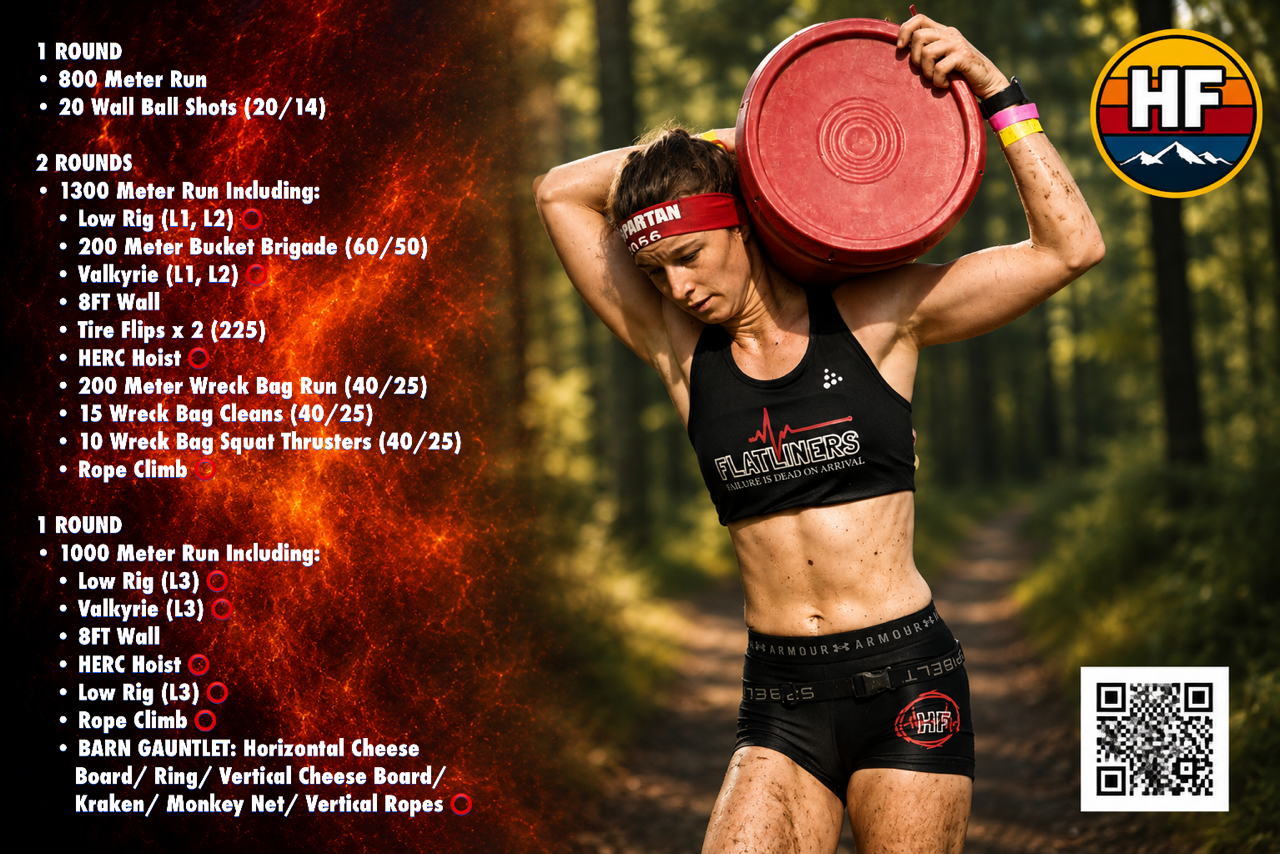
BREAKING DOWN A TRUE OCR SIMULATION WORKOUT
Obstacle Course Racing has always lived in the uncomfortable space between worlds.
Ask a runner what OCR is and they’ll usually say:
“It’s a trail race with some obstacles.”
Ask a strength athlete and they’ll say:
“It’s basically CrossFit outside.”
Both are wrong.
The reality is that true OCR training requires something far more complicated — the ability to run efficiently, control your heart rate, manage fatigue, carry awkward objects, climb, grip, crawl, transition, and make technical decisions while your body is begging you to stop.
That’s exactly why at HartFit ELEVATE OCR in Colorado Springs, we don’t just write workouts.
We build simulations.
Because race day doesn’t care how strong you are when you’re fresh.
Race day exposes what happens when you’re tired.
⸻
The Workout: OCR PULSE Simulation
This workout covered nearly 4 miles of running combined with race-specific obstacles and functional strength movements designed to replicate the demands of a Spartan Race, OCR World Championship style event, or competitive obstacle course race.
The session included:
800 meter run
Wall balls
Multiple 1300 meter trail running sections
Technical low rigs
Bucket carries
Wreck bag carries
Valkyrie obstacle training
8 foot wall climbs
Tire flips
HERC Hoist
Wreck bag cleans
Squat thrusters
Rope climbs
Multi-obstacle grip endurance work
This isn’t random exercise.
This is controlled chaos.
⸻
The Biggest Mistake OCR Athletes Make: Separating Fitness and Obstacles
A lot of athletes make the mistake of training OCR in separate boxes.
Monday: Run.
Tuesday: Lift.
Wednesday: Grip strength.
Saturday: Maybe practice obstacles.
The problem?
That’s not how racing works.
Nobody asks you to climb a rope after a perfect warmup.
Nobody puts a rig at mile zero when your hands are dry and your heart rate is comfortable.
You hit obstacles after climbs, carries, descents, mud, weather, fatigue, and elevated breathing.
That’s why transition training matters.
Can you go from a hard run directly into a technical obstacle?
Can you control your breathing?
Can you slow your hands down while your heart rate is elevated?
That’s OCR.
⸻
Heart Rate Training for Obstacle Course Racing
One of the biggest misunderstandings in OCR is believing every workout needs to destroy you.
Looking at the data from this simulation:
Zone 3: 74%
Zone 4: 22%
Average pace: 8:49/mile GAP
Continuous movement: 36+ minutes
Almost no walking
This is exactly where a huge amount of OCR performance is built.
Not lying on the floor.
Not chasing exhaustion.
Building the engine.
The best OCR athletes aren’t just the people who can suffer the most.
They’re the people who can stay composed longer.
⸻
Why Zone 3 Matters for Spartan Race Training
A Spartan Race is rarely a true max effort sprint from beginning to end.
Even elite racers spend significant amounts of time managing sustainable discomfort.
Zone 3 teaches your body:
better aerobic efficiency
improved recovery while moving
better pacing
smoother transitions
the ability to attack obstacles without redlining
The goal isn’t always a higher heart rate.
The goal is doing more work at the same heart rate.
That’s fitness.
⸻
Grip Strength Under Fatigue: The Missing Piece
Anyone can do monkey bars fresh.
Anyone can climb a rope after standing around.
But can you do it after:
running several miles
carrying 50+ pounds
flipping tires
loading your legs
spiking your breathing
That’s the difference.
OCR grip strength isn’t just stronger hands.
It’s understanding body position, efficiency, technique, and energy conservation.
Strong athletes fail obstacles every race because they try to muscle through everything.
Efficient athletes survive.
⸻
OCR Training vs CrossFit vs HYROX vs Ninja Warrior
This is where OCR gets misunderstood.
Are we a Ninja gym?
No.
More strength and conditioning.
Are we a CrossFit gym?
No.
More running.
Are we HYROX?
No.
Because we kept the obstacles.
OCR demands pieces from all of them but requires something completely unique.
You have to move your body through the environment.
⸻
Why HartFit ELEVATE OCR Trains Differently
Our goal isn’t simply making workouts hard.
Hard is easy.
Anyone can destroy someone.
The goal is creating athletes who are prepared.
That means:
smart running development
obstacle technique
grip efficiency
strength endurance
carries
transitions
mental control under fatigue
Because the mountain doesn’t care about your deadlift.
The rig doesn’t care about your 5K time.
Race day asks one question:
Can you put everything together?
That’s what we train.
⸻
HartFit ELEVATE OCR – Colorado Springs Obstacle Course Race Training
Training for Spartan Race, OCR World Championships, hybrid fitness, endurance racing, and athletes who want more than just another workout.
THE POWER OF RECOGNITION - AND THE UNINTENDED COST OF ITS ABSENCE
The power of recognition—and the unintended cost of its absence.
I never wanted anyone to feel that way. Least of all my athletes.
I crossed the finish line of the 2015 Spartan World Championship Beast at Lake Tahoe beaten, cold, and shaking uncontrollably. Around me, the air was electric. Athletes poured in after completing one of the most brutal inaugural courses Spartan had ever staged at that location. There were hugs, high-fives, tears—gratitude and pride spilling out everywhere.
I felt none of it.
Instead, I wandered to an empty spot on a patio just outside the parking lot, lowered myself against a railing, and stared at my medal. I waited—hoping that some fraction of what I had just witnessed would arrive.
It didn’t.
What I felt was relief that it was over, followed immediately by a deep, unexpected sadness.
It would have meant everything if my family had been there. But we were fresh off opening a new gym, barely a year removed from buying our first home, and the cost of just getting me to Tahoe had already stretched us thin. There was no room for anyone else.
HartFit—Hart Fitness LLC back then—was still young. My primary clients were loyal one-on-one athletes who didn’t care about Spartan races. They cared enough about me to leave the familiarity of my previous gym and follow me to a new location, one better aligned with the direction I felt pulled toward.
Our OCR offering consisted of two small classes—simply called HartFit SGX—about six people total. Each had different levels of interest and commitment, but all were curious, hungry, and brave enough to step into something wildly unfamiliar at the time.
Sitting there alone that day, I knew one thing with absolute certainty:
I never wanted them to feel empty on a day when empowerment should outweigh exhaustion.
There was no “team” yet—but there was a growing urgency to create something bigger than me. Something that could reach my athletes even when I couldn’t physically be there.
So I tried to be everywhere.
I showed up to as many races as possible. I ran no fewer than two laps—one with the competitive crew, then immediately another with the open wave. If I missed someone on course, I stayed until they crossed the finish line, even if it meant getting home a day later than planned. Often to the disappointment of my family.
I tried justifying it by telling myself I was teaching my kids what commitment looked like. That when someone invests in you, you honor that by investing back—fully.
I was there for the victories and the breakthroughs. I watched athletes confront fear, endure discomfort, and overcome things they never believed they could. I got a lot of miles in myself, too.
Eventually, we became the FLATliners. The mission solidified: proving to ourselves that Failure Was Dead on Arrival. By 2018, it was no longer possible for me to be everywhere—but the culture ensured no one ever felt alone. Someone—often everyone—was there to see you finish and celebrate you in a way your effort deserved.
But as podiums multiplied and accolades grew, a quiet tension emerged.
Some athletes began to feel overlooked. Resentment surfaced—not loudly, but unmistakably—when recognition seemed to favor podium finishes over those who gave everything simply to finish.
I understood it.
Because I had felt it myself.
My first—and most painful—experience came two years after that Tahoe Beast. Watching the Ultra athletes finish the following day had planted a seed. Part of my disappointment in Tahoe came from burpeeing out of the swim—not because the water was brutally cold (it was), but because as a man in his late 30s, I still couldn’t swim.
If I was going to lead honestly—if I was going to inspire others—I needed to face that fear. I also knew a Beast was no longer enough.
So I committed to returning and completing my first Ultra.
It was extraordinary. The only time I can remember running the final miles of a race in tears—knowing I had accomplished something few could, back when Ultra completion rates hovered below 40%. I endured the winter extremes Tahoe delivered that day.
The same extremes that forced them to cancel the swim.
Once again, accomplishment came with an asterisk. Once again, it felt diminished.
So there was only one option left.
Killington.
Where Spartan began. Known for unpredictable September weather, the Death March, and the infamous Tarzan swing beneath a bridge over water so cold it was impossible to forget.
This wasn’t just a swim—it was two. One to reach the rope ladder. One after plunging back into the lake, regardless of success or failure.
For someone who doesn’t tolerate his head being underwater, it was terrifying.
But I had to do it.
My kids—strong swimmers at young ages—had watched me struggle at our neighborhood pool, quietly practicing early mornings and late evenings to avoid embarrassment. I needed them to see this.
I reached the lake early in the race, sitting in 7th place. Hesitant. The longest swim I’d ever attempt by more than 100 yards. The life jacket was my only real safeguard.
I pushed out, barely moving—floating more than swimming—carried forward mostly by the current created by other racers. Eventually, I reached the bridge.
And no one was there.
My heart sank lower than my head ever would. I crossed the ropes, then dropped back into the water—afraid that swinging harder would only drive me deeper beneath the surface.
I drifted back to shore, repeatedly slammed into buoys by the current, warned again and again by volunteers to stop—warnings that stung because I had no control.
Now in 93rd place, and with still so much race left. Knowing I’d face this again in a few hours, I did my burpees and moved on, convinced that next time someone would be there to witness it.
But they weren’t.
And that’s when I truly understood the weight recognition carries—not as ego, but as affirmation. Not as reward, but as witness.
And why I never want anyone who gives their all to ever feel unseen again.
So I went deeper than the frigid waters of that lake ever forced me to.
I leaned into the one advantage I knew I had. Writing. The ability to tell a story. And the reality that this wasn’t a side hustle—it was my livelihood—meant I could devote the time others couldn’t. Every athlete would receive more than a finish-line congratulations. They would get recognition. A full write-up. Their effort would be seen, documented, and honored.
The gym depended on it.
We had built a reputation on the course and within the community, but it wasn’t translating into stability at the gym. Debt continued to climb, and the strain it placed on my family grew heavier by the day.
I could feel it shifting. Local competitors—many of whom believed I was in over my head—started to sense vulnerability. And if protecting what we’d built meant sacrificing my own racing so I could be everywhere my athletes needed me to be, I was willing to do it.
I became a fixture on the course. I filmed them the way I coached them in class. I promoted them in ways I believed only I could. I made them feel like superstars—even when the broader OCR media refused to shine a light on anyone who didn’t meet its evolving definition of “pro caliber.”
I hunted down race photos and tagged athletes before they even knew the galleries were live. I created albums so moments wouldn’t disappear into feeds but would live permanently as part of our shared history. I memorized race schedules, tracked who was racing where, and showed up without needing to be asked.
And I either didn’t ask for help or felt extreme guilt or reluctance to accept it when one someone would offer it.
This was my business. If I couldn’t do this better than anyone else—if this level of care and visibility didn’t convince people to choose us, and choose to stay—then it would have to end. I was out of business loans. Out of balance transfers. And at a point where racing wasn’t just something I had to limit—it was something I could no longer afford at all, especially when travel was involved.
So the rule became simple: give more. Never ask for more.
Fitness—no matter how valued—is always the first expense people cut. Most don’t leave because they stop believing. They leave because of money. So I made sure we gave them more than they paid for.
At least two classes every week ran well beyond the standard hour. Extra coaching. Extra attention. Extra effort. So even those who couldn’t come often still felt the value of staying—not just in the workout, but in being seen, supported, and recognized as an athlete who mattered.
Not just to a gym.
But to a team.
There was, however, an unintended consequence to building a culture like this—one the sport may never have been meant to carry, yet somehow absorbed anyway.
And if that is true, then I bear real responsibility for it.
You feel it most clearly standing on your first podium after twenty-four hours of suffering, looking out at an empty crowd, realizing that many of the same people you never allowed to finish alone had something else to do that day.
And I never should have blamed them for that.
None of us should have held that against one another.
This sport was designed to accelerate belief—belief in what lived inside you. But somewhere along the way, it became about what could be displayed on the outside.
In the early days, I didn’t even allow phones during workouts. Training was meant to be an escape from the synthetic world—a reconnection to sweat, dirt, and nature. At races, no one complained about photo quality, angles, or quantity. You were grateful for a single blurry clip—something to reflect on privately, maybe share with a few people who mattered.
Social media hadn’t yet become what it is now, though it loomed just beyond the horizon. And when it arrived fully, recognition quietly shifted from affirmation to distraction. Enough was no longer enough. It spread like a virus, feeding on comparison and expectation.
Over the years, I was pulled aside more times than I can count. Messages sent. Conversations had. Athletes leaving—not because they lacked opportunity, but because they felt my attention wasn’t being distributed “fairly.” More often than not, those feelings came from people who had previously benefited greatly from that same attention—and who, at one time, had been viewed by someone else as the favorite.
I was learning quickly that accolades bring complexity. And with them came inside competition that can be both advantageous and destructive. When you build a team, you inevitably create a clique. And cliques give rise to other cliques. Before long, people wearing the same jersey quietly resent one another in subtle, corrosive ways.
Young athletes dominating their age groups were dismissed because they “weren’t racing against anyone.” Consistent podium finishers had their achievements—and even the prize money I sent them—questioned because they were “only age-group podiums,” despite that being the very foundation of the sport.
And as HYBRID fitness became more woven into the fabric of HartFit, accusations emerged that favoritism still leaned toward OCR. Those claims weren’t just voiced—they were amplified by people eager to exploit cultures they could never build themselves.
And somewhere in all of that, recognition—once meant to lift—became something that divided.
I began to pull back—not because my passion for my athletes had faded, but because it had sharpened. If anything, I became more protective than ever. That protectiveness often spilled over into friction with the local community, as I held on too tightly and reacted like an overbearing parent, defensive and quick to strike.
But I was also starting to see the damage that had been done.
I came to understand, painfully, that I could not be everywhere at once. Even my own team was no longer exclusively mine. The exposure I had worked so hard to create was finally happening—but not in a way that served the athletes or the team. It benefited those doing the promoting, often at the expense of the very influence and care I had poured into the culture.
The result was division. Distrust crept in—quiet at first, then unmistakable. It’s a powerful weapon when used against a team built on honesty, integrity, and trust. Resentment toward the gym began to grow, or at the very least toward the coach and owner who had built it.
Races stopped feeling like shared experiences and started feeling like obligations. Podiums became transactional—tools for promotion, proof points for why athletes should choose our brand. Somewhere along the way, the fun disappeared, and nearly everyone could feel it.
And those who had helped push things in that direction—always in ways that looked politically positive on the surface—watched closely. They could sense the shift. They could see HartFit, and the version of the sport it was built around—one many had already moved on from—beginning to crack.
And they were ready to capitalize on it.
The dream finally began to fade, and reality set in—hard and unmistakable.
The truth had been circling for a long time, but it wasn’t until the early months of 2023 that I formally acknowledged it: it might be time to retire the team and the endeavor, and start again somewhere new—somewhere I could apply the lessons I had learned the hard way.
The passion for my athletes never disappeared. The commitment never left. But it became quieter. Less performative. Less visible on public platforms—a battle I had already lost.
I began to accept that these might be the final times I would wear that jersey. And if I was going to retire it properly—for my own soul—I decided there were three things I owed myself.
First, to return to New Jersey and seek redemption for an Ultra lost to division, distraction, and the fractured spirit that had surrounded the team at that time—a race that ended in my first DNF.
Second, to run another Ultra at a venue where I had once come close enough to a podium to feel it slip through my hands—and finally claim one.
And third, to finish the year by running one more Ultra alongside the woman I loved, someone pursuing her own redemption at a place tied to frustration…
…and to old friendships.
But more important than any of that, I needed to do it quietly.
No promotion. No advertising. No narrative built around it.
I needed to prove to myself that accolades were never what I was chasing—and to confront the realization that the pursuit of recognition had become the very thing dismantling what I’d built. I knew the silence would offend some people, and it did. Living transparently for so long had led others to believe they were entitled not only to judge my life, but to track and comment on every move I made.
I needed to know that what I was doing was truly for me—that the constant pressure to display success, to climb some imagined ladder, had not become my identity.
Unfortunately, that deeply personal decision was interpreted by many as selfishness. In a space crowded by cliques, someone was always ready to leak a conversation—often about a person they’d been laughing with just the day before.
And in the end, I had to own it.
I failed.
My instinct to lead through recognition and attention produced the exact opposite of the gym I envisioned—and, more painfully, contributed to the erosion of the sport I loved.
A sport that, in many ways, was now dying under the very weight of what I helped normalize.
The last race I coached was a desperate attempt to hold onto a few remaining memberships—to keep the gym alive just a little longer before we ultimately made the decision to close.
One more time, I tried to be everywhere.
I ran the course privately the day before—not as a workout, not as training—but to study it. To learn the cut-throughs. To calculate how quickly I could move across mileage so I could reach my athletes repeatedly and make sure no one ever felt abandoned.
With athletes spread across endurance, elite, and open divisions, the task was daunting. But I had pulled it off before—nearly flawlessly. And that day, it had to work. This had become my competition.
Not other racers.
The clock.
The clock for my athletes.
And the clock on HartFit itself.
Others would be out there too—groups and individuals who resented me and believed they were owed something I never promised. They moved with intention, knowing that every membership HartFit lost could easily become a gain for them. My athletes now appeared in their group chats, and many—understandably—welcomed the recognition and promoted right back.
I can’t fault them for that.
I built the environment where acknowledgment at any cost became currency.
But in trying to cover everyone, I missed something critical.
I couldn’t make it from the back end of the course to a key obstacle where several of my competitive women got stuck—an obstacle I truly believed I had prepared them for. Bands were lost before I could intervene. I knew—without question—that the outcome would have been different if I’d been there.
Public cheers came from people playing the role of supporters. Private ridicule followed shortly after—in whispers, in messages, in threads I would never see but would feel the consequences of.
We earned a few podiums that day.
But nowhere near what I knew we were capable of—especially at a race perfectly suited to our style of OCR.
The following week, we lost two more memberships.
And that was that.
What I once believed promotion, accolades, and recognition would strengthen had long since turned against us. The very tools I used to build connection and pride ultimately fractured what we had created. We went from a culture where phones weren’t allowed in class—where presence mattered—to one where messages arrived filled with accusations of favoritism, neglect, and being overlooked.
I had opened something that could never be contained again. A door that doesn’t close. A truth that can’t be unlearned. And once it opened, the contents of HartFit spilled outward—into conversations, into perceptions, into places I could no longer control.
What begins as affirmation can quietly become expectation.
What starts as motivation can harden into entitlement.
What is meant to lift can, if left unchecked, divide.
Recognition was never the problem. The chasing of it was.
OCR was meant to be a mirror—to show you who you are when comfort is stripped away. But when the reflection becomes more important than the work itself, something essential is lost. I learned, too late, that recognition carries weight, and when it is given freely, loudly, and constantly, it can bend a culture in ways you never intended.
The power of recognition is real.
So are the consequences of its existence.
And sometimes, the hardest lesson isn’t learning how to give it—but knowing when to let it go.
So yes, the FLATliners team was retired on an official basis at the closing of 2025, the decision made to preserve all of the good, before the complete collapse of both public perception and purpose that I had long lost control of.
In those who still choose to wear the jersey, a headband or even a hat or sweatshirt, I hope that they will always remember and continue to represent the parts of us that were good, and that it serves as the only recognition you’ll ever need that you mattered beyond the scope of anything that anyone outside of yourself could ever matter more.
And to a sport that has seen both the emergence of promotion and prominence to the decline of both, maybe that is actually a good sign.
Maybe, just maybe, we’re getting back to our roots.
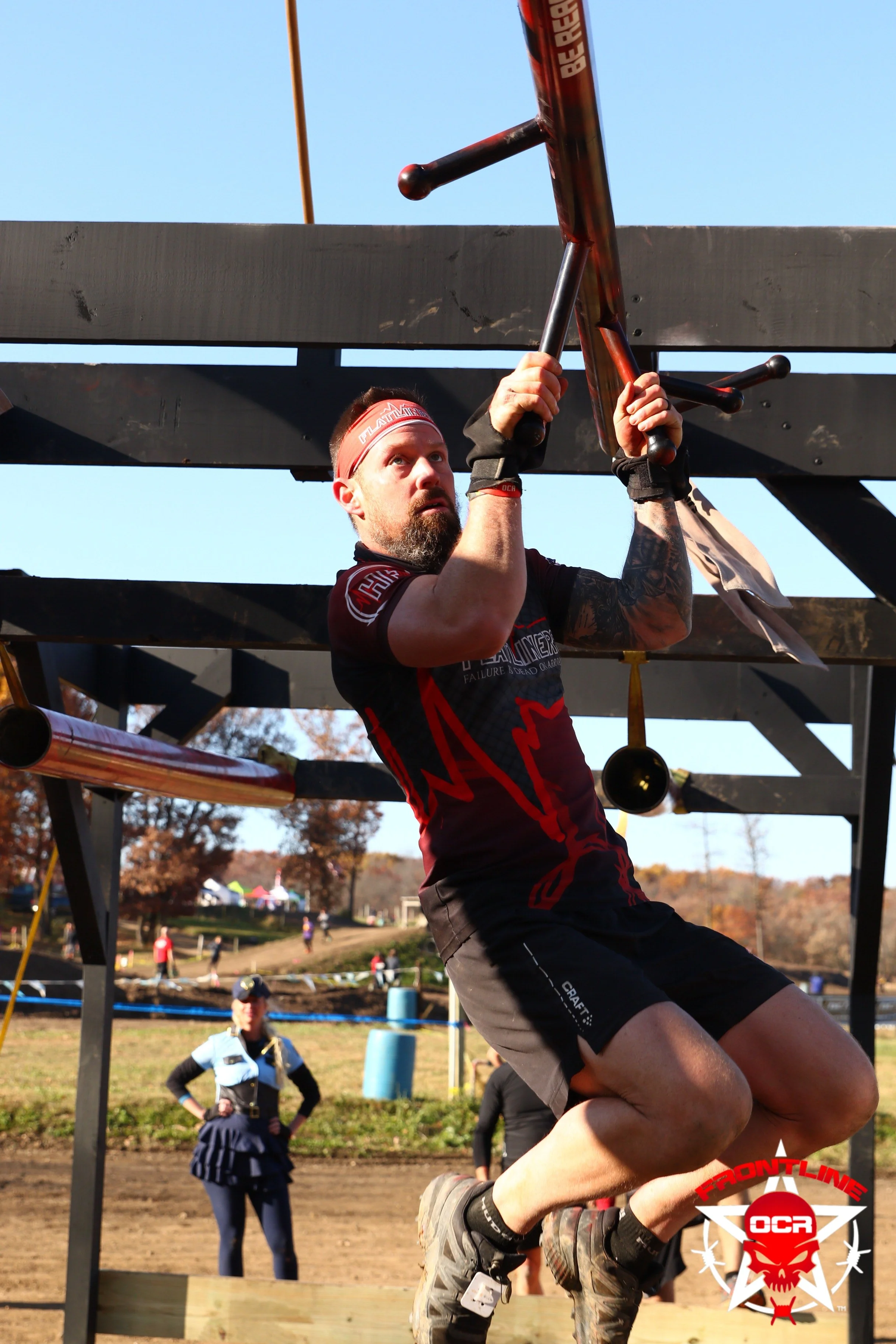
YOUR “A” RACE… CONVENIENTLY CHANGES AFTER YOU LOSE.
One of the most fascinating skills in obstacle course racing isn’t grip strength, endurance, or running economy.
It’s the ability to completely rewrite the importance of a race after the results are already in.
It’s almost magical.
Before the event? Months of countdown posts. New shoes. New nutrition strategy. Every workout is somehow “dialed in.” Friends are told this is the race you’ve been building toward. Family is following live tracking. Social media gets the dramatic sunrise photo with the caption about sacrifice, discipline, and chasing greatness.
Then something happens.
You miss a podium.
You fail an obstacle.
You lose your band.
You get humbled by weather.
You meet an obstacle you’ve never seen before and discover Mother Nature doesn’t care about your Instagram reel.
Suddenly…
“Well, this wasn’t really my A race anyway.”
Amazing.
Apparently the importance of a race exists in a quantum state until the finish line decides whether you performed well or not.
Funny how that works.
Because let’s be honest.
If you had won, we’d never hear that it wasn’t your A race.
We’d hear about your relentless work ethic.
Your discipline.
Your resilience.
Your mindset.
Your nutrition.
Your visualization.
Your morning routine.
Your recovery protocol.
Your breathing exercises.
Your cold plunge.
Your dog believing in you.
Everything would have contributed to that victory.
But lose?
“Oh… this was really just a tune-up.”
Sure it was.
One thing that drives me crazy in OCR is how quickly people diminish races simply because they didn’t perform well there.
Especially local races.
Some of the hardest obstacle races I’ve ever done weren’t giant productions with television crews, prize purses, and thousands of spectators. They were smaller events built by people who genuinely wanted to challenge athletes instead of create another glorified trail run with occasional monkey bars.
Sometimes those local races beat people.
And instead of giving the course credit…
Instead of admitting they got outperformed…
Instead of saying, “That obstacle exposed something I need to improve…”
They simply shrink the value of the race itself.
“Yeah… my real focus is the next big race.”
Interesting.
The course didn’t suddenly become easier because fewer people were watching.
The obstacles didn’t become less legitimate because they weren’t branded by a billion-dollar company.
The only thing that changed was the result.
That’s the part that gets rewritten.
I don’t race very often anymore.
Life, business, coaching, and finances don’t exactly allow me to travel every weekend pretending I’m a professional athlete sponsored by my Visa card.
So when I register for a race, I’m racing.
Not “testing.”
Not “seeing where my fitness is.”
Not collecting participation photos before my real season starts.
If I paid the money, drove the distance, woke up before sunrise, stood in the starting corral, and crossed that timing mat…
That race mattered.
Every single one.
I’ve kept my band at most OCR races I’ve entered.
I’ve lost it at a few.
Most notably at Frontline OCR on Halloween of 2020.
The coach with the biggest team, the team with the most accomplishments across local OCR’s of the Midwest, and someone who desperately needed a personal win during an incredibly difficult time couldn’t get Kraken 2 out of 3 times seeing it.
I couldn’t believe how small it made me feel. This “wasn’t supposed to be happening to me” never crossed my mind.
I was unprepared and the race exposed it, the very purpose of a purpose driven race.
I didn’t I cross the finish line and suddenly decide it had all been practice because things didn’t go according to plan.
Sometimes I simply wasn’t good enough that day.
Sometimes someone else was better.
Sometimes the course exposed weaknesses I hadn’t addressed.
That isn’t failure.
That’s racing.
Years ago, I watched this mentality spread through our own gym.
One athlete started treating every disappointing result as though it didn’t count because something bigger was supposedly on the horizon.
Soon enough others began adopting the same excuse.
Every bad race became a stepping stone.
Every poor performance became “part of the process.”
Every failure came with an explanation before anyone had even asked for one.
It became a disease.
Because once you convince yourself every disappointing result doesn’t really count…
You never actually have to confront why it happened.
Your ego stays perfectly protected.
Your weaknesses stay perfectly hidden.
Your progress stays perfectly stagnant.
Then there’s my favorite collection of post-race explanations.
“I’ve just been really stressed lately.”
“I’ve been fighting a little injury.”
“I’ve been overtraining.”
“I’ve been undertraining.”
“I’ve been sick.”
“I’ve been too busy.”
“My nutrition was off.”
“My taper wasn’t right.”
“My sleep wasn’t great.”
“My chakras were slightly misaligned.”
And of course…
“It was God’s plan.”
Apparently God has become OCR’s official public relations department.
Look, I’m a man of faith.
But maybe—just maybe—God didn’t sabotage your low rig because He wanted to teach you humility through hanging upside down from a ring.
Maybe you just let go.
Maybe someone else executed better.
Maybe you simply got beat.
There’s no shame in that.
The shame comes from refusing to admit it.
At HartFit, we have a different philosophy.
Practice happens here.
The simulations.
The grip work.
The carries.
The conditioning.
The failed attempts.
The repeated obstacles.
The ugly sessions where nobody is watching.
That’s practice.
The race is the exam.
You don’t get to finish the test, look at your score, and then decide it was only a pop quiz because you didn’t like the grade.
That’s not how competition works.
Respect the race enough to let it count.
Respect the course enough to admit when it beat you.
Respect your competitors enough to acknowledge they performed better.
Most importantly…
Respect yourself enough that you don’t need to rewrite history just to protect your ego.
Because if every victory proves how great you are, then every defeat deserves the same honesty.
Otherwise you’re not competing.
You’re just negotiating with reality.
THIS 4TH OF JULY, CELEBRATE THE ONE FREEDOM NOBODY CAN TAKE FROM YOU
Happy Independence Day.
The weekend where we celebrate a country founded, in part, on telling a government, “We’re not paying your taxes anymore.”
Fast forward 250 years.
Now we pay taxes when we earn money. Taxes when we spend money. Taxes on our property. Taxes on our gas. Taxes on our registrations. Taxes on our phone bills. Taxes on things we already paid taxes on.
Freedom sure got expensive.
We’re told everything is for our own good. Trust the experts. Trust the system. Trust the next study. Trust the next headline. Trust the next politician. Trust the next miracle pill. Just keep consuming, keep scrolling, keep buying, and whatever you do…
Don’t ask too many questions.
But here’s the thing.
Whether you think the system is working perfectly or completely broken doesn’t change one important reality:
You still wake up in the same body tomorrow.
Nobody else is going to squat your weight.
Nobody else is going to climb that rope.
Nobody else is going to run that hill.
Nobody else is going to make your heart stronger.
Nobody else is going to choose what goes into your mouth.
That’s still your job.
This weekend millions of people will celebrate freedom while voluntarily surrendering control of the one thing they actually have complete authority over.
They’ll eat until they’re miserable.
Drink until they can’t remember.
Tell themselves they’ll start Monday.
Again.
Because Monday has become the most popular holiday in America.
Sure, enjoy the barbecue. Have dessert. Live your life.
But don’t convince yourself that complete lack of discipline is somehow freedom.
It isn’t.
It’s dependence.
Dependence on convenience.
Dependence on processed food.
Dependence on medications to fix problems that years of neglect helped create.
Dependence on someone else having the answers instead of taking ownership yourself.
Eat the hot dog if you want.
Just don’t pretend that a mystery-meat tube on a bleached white bun loaded with ingredients your great-grandparents couldn’t pronounce is somehow patriotic because it came off a grill.
Then we all gather around as the sky lights up with fireworks for twenty minutes before going back to living exactly the same way we did the day before.
The colors are beautiful.
Your future could be too.
But only if you decide to change something after the fireworks are over.
At HartFit ELEVATE OCR, we don’t promise easy.
We don’t promise six-minute abs.
We don’t promise that one workout erases years of neglect.
What we do promise is this:
We’ll help you reclaim ownership of your body.
We’ll teach you to become capable instead of comfortable.
To choose discipline over excuses.
To become harder to kill, harder to intimidate, and harder to convince that someone else should be responsible for your health.
Because governments change.
Policies change.
Economies change.
The news changes every single day.
But your ability to take control of your own body?
That’s one freedom that still belongs entirely to you.
So this Independence Day…
Celebrate however you want.
Eat the burger.
Watch the fireworks.
Spend time with family.
But when the smoke clears and everyone goes home, remember this:
The greatest declaration of independence you can make isn’t political.
It’s deciding that from this day forward, your health, your strength, and your future are your responsibility.
Nobody else’s.
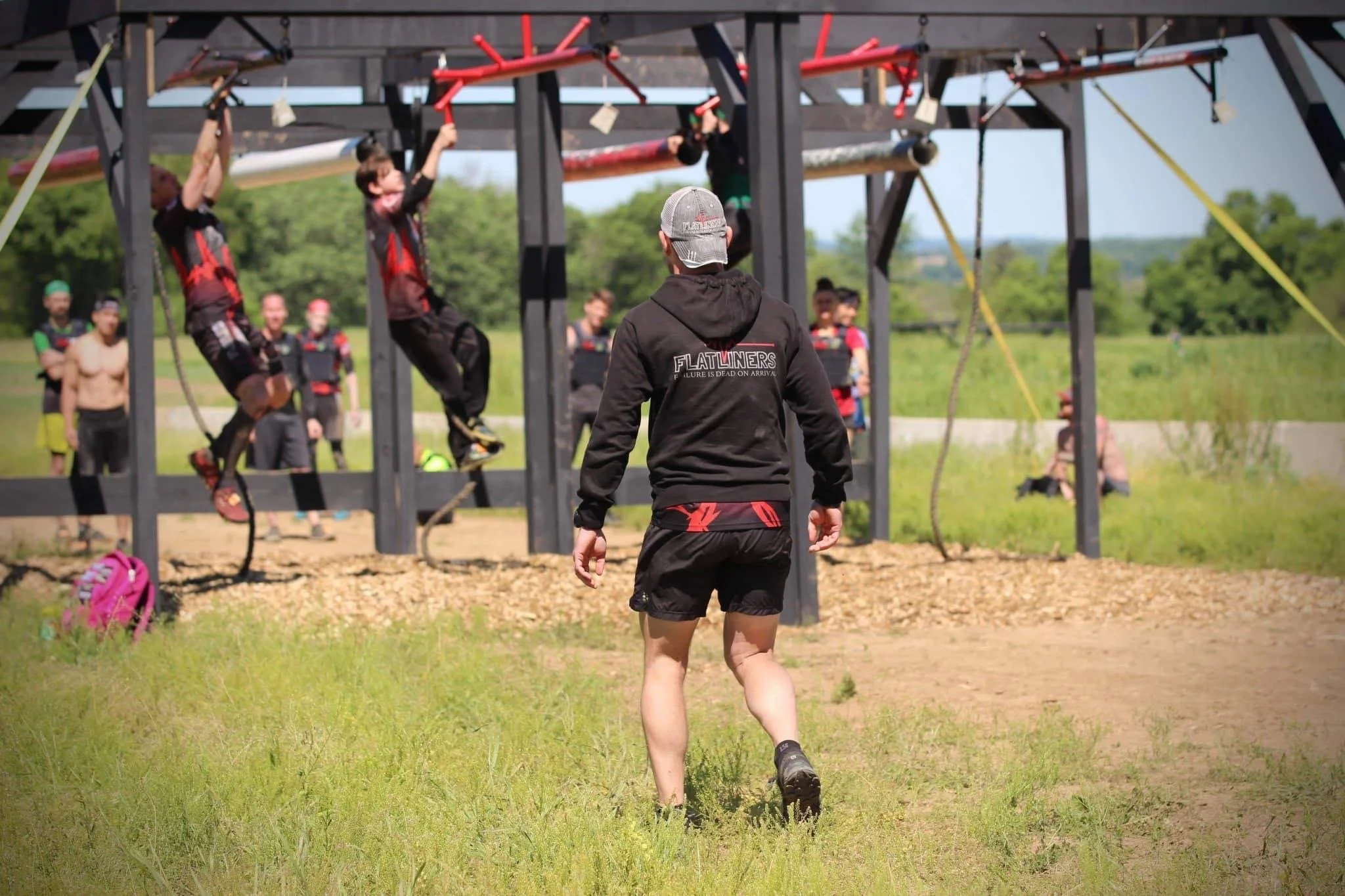
HARTFIT ELEVATE OCR: THE PERFECT FIT FOR FITNESS IN COLORADO SPRINGS, PEYTON, FALCON & ELBERT
If you’ve been searching for the perfect fit for fitness in Colorado Springs, Peyton, Falcon, Elbert, or the Eastern Plains, you’ve probably noticed there are plenty of gyms offering the same four walls, rows of machines, and group exercise classes.
At HartFit ELEVATE OCR, we believe fitness should prepare you for life—not just an hour inside a building.
That’s why we’re the perfect fit for people who want to become stronger, healthier, more capable, and more resilient.
Why HartFit Is the Perfect Fit for Fitness
Fitness means different things to different people.
Some people want to lose weight.
Some want to run their first 5K.
Others want to dominate a Spartan Race, DEKA, or HYROX event.
Some simply want to be able to keep up with their kids or handle the physical demands of ranch work, military service, first responder duties, or everyday life.
Our coaching adapts to your goals while building the qualities that matter most:
Functional strength
Cardiovascular endurance
Grip strength
Balance and coordination
Mobility
Mental toughness
Obstacle proficiency
Confidence
That’s fitness with a purpose.
More Than a Gym
HartFit ELEVATE OCR isn’t designed around rows of treadmills.
It’s built around movement.
Our outdoor training facility combines:
Obstacle course racing (OCR) training
Hybrid fitness
Trail running
Strength and conditioning
Functional carries
Grip development
Athletic movement
Every workout is designed to make you better at moving through the real world—not just better at using gym equipment.
Built for Beginners. Proven for Competitors.
One of the biggest misconceptions people have is that they need to “get in shape first.”
No.
This is where you get in shape.
Every OCR PULSE Simulation uses a scaling system so athletes of all experience levels can train together.
Whether you’re:
Brand new to fitness
Returning after years away
Training for your first Spartan Race
Preparing for DEKA or HYROX
Looking for something different than a traditional gym
our coaching meets you where you are.
Real Coaching. Real Experience.
Experience matters.
HartFit has been coaching obstacle course racing athletes since 2013.
Over that time we’ve helped athletes:
Finish their first OCR
Earn podium finishes
Qualify for championship races
Build confidence they never thought possible
Our programming isn’t copied from social media trends.
It’s built from years of coaching real athletes through real obstacles.
Colorado Is Meant to Be Experienced
Living in Colorado means having access to incredible trails, mountains, parks, and outdoor adventures.
Why spend all your training indoors?
At HartFit ELEVATE OCR, you’ll train outside in changing terrain and changing conditions.
Wind.
Heat.
Snow.
Elevation.
Those aren’t inconveniences.
They’re part of becoming capable.
Fitness That Transfers to Everyday Life
Our members include:
Parents
Ranchers
Hobby farmers
Military members
Veterans
First responders
Professionals
Weekend adventurers
They don’t train simply to look fit.
They train to live better.
Carrying feed bags.
Loading equipment.
Helping a friend move.
Playing with kids.
Hiking a fourteener.
Running your first obstacle race.
Fitness should transfer beyond the gym.
Why HartFit Is Different
We’re not trying to be everything to everyone.
We’re focused on building capable people.
That means every workout develops multiple fitness qualities at once instead of isolating muscles on machines.
You’ll leave each class knowing you accomplished something meaningful—not simply burned calories.
The Perfect Fit Starts Here
If you’re looking for:
OCR training in Colorado Springs
Functional fitness near Peyton
Outdoor fitness classes
Spartan Race training
Hybrid fitness
DEKA preparation
Grip strength training
Trail running workouts
Obstacle course training
Personal training in Peyton
HartFit ELEVATE OCR was built for exactly that.
Whether your goal is weight loss, better health, your first obstacle race, or simply becoming more capable in everyday life, you’ll find coaching, community, and purpose here.
Stop Looking. Start Training.
The perfect fitness program isn’t the one with the fanciest equipment.
It’s the one you’ll actually enjoy showing up for because every workout has purpose.
At HartFit ELEVATE OCR, we don’t just help you get fit.
We help you become capable.
Ready to experience a different kind of fitness?
Visit http://www.hartfitocr.com to register for an OCR PULSE Simulation, schedule personal training, or learn why more athletes throughout Peyton, Falcon, Elbert, Colorado Springs, and the Eastern Plains are discovering that HartFit ELEVATE OCR is the perfect fit for fitness.
CONFLICTING TRAINING PLANS COULD BE HOLDING YOU BACK
If you’re searching for the best OCR training program, Spartan Race coaching, obstacle course race training, or wondering how to combine running, strength training, CrossFit, HYROX, and OCR, you may actually be creating your biggest obstacle before you ever reach the start line.
One of the most common problems I have seen since coaching OCR athletes in 2013 isn’t a lack of motivation. It isn’t a lack of fitness. It’s athletes trying to follow multiple training philosophies at the same time.
On paper, it sounds like a great idea.
A running coach to improve your pace.
A strength coach to build power.
CrossFit for conditioning.
Yoga for mobility.
An OCR coach for obstacle technique.
It sounds comprehensive.
In reality, it often becomes chaos.
Every Coach Is Programming Toward Their Own Goal
This isn’t about saying one style of coaching is better than another.
Great running coaches know how to make runners faster.
Great strength coaches know how to make athletes stronger.
Great CrossFit coaches know how to improve work capacity.
Great yoga instructors improve mobility, flexibility, and recovery.
The problem begins when none of those coaches are communicating with each other.
Every coach believes their workout deserves your freshest legs, your highest effort, and your full recovery afterward.
Unfortunately, your body doesn’t care whose logo is on the workout.
Your nervous system only knows one thing:
Stress.
It doesn’t separate hill repeats from deadlifts.
It doesn’t care whether sore forearms came from pull-ups, grip training, biceps day, or hanging from a low rig.
Stress is cumulative.
Recovery has limits.
More Work Doesn’t Mean More Progress
One of the biggest misconceptions in fitness is that adding another workout automatically makes you a better athlete.
Sometimes it does.
Often it simply makes you a more tired athlete.
I have watched athletes spend an hour crushing an upper-body workout because they wanted bigger arms, only to show up at OCR practice wondering why they suddenly couldn’t stay on obstacles they normally completed with ease.
It wasn’t because the obstacle got harder.
It was because they had already spent their grip, pulling muscles, and nervous system chasing a pump in the mirror.
Your body doesn’t care that your curls happened six hours earlier.
Fatigue is fatigue.
The obstacle exposes it.
OCR Is More Than Running and More Than Strength
Obstacle course racing is unique because success isn’t determined by one physical quality.
You have to run well.
You have to climb.
Carry.
Grip.
Pull.
Balance.
Recover.
Then repeat all of it while your heart rate is through the roof.
That’s why our OCR PULSE Simulations are intentionally designed to force athletes into uncomfortable transitions.
You’ll run hard.
Then immediately face technical obstacles.
Then run again.
Then carry.
Then climb.
That isn’t accidental.
That’s exactly what racing demands.
The Goal Isn’t Just Fitness. It’s Performance Under Fatigue.
Years ago, I had athletes who were also working with a running coach.
Instead of treating our simulations as the race-specific workouts they were designed to be, they were instructed to keep their pace intentionally slow because they had harder running scheduled elsewhere.
The problem was that our sessions weren’t simply running workouts.
They were transition workouts.
The objective wasn’t to see how fast someone could run a lap.
The objective was to experience exactly what happens when you attack a run aggressively and then have to solve obstacles while breathing hard, making decisions under fatigue, and trying to control technique with exhausted muscles.
If you remove the intensity from the running, you’ve removed the very reason the workout exists.
That’s like practicing free throws without ever shooting at a basket.
Injuries Rarely Happen in Isolation
Over the years, I’ve also seen athletes blame OCR for injuries that actually began somewhere else.
The obstacle wasn’t the cause.
It was simply the moment the damage finally revealed itself.
Maybe they were adding extra lifting sessions.
Maybe they were doing endless accessory work.
Maybe every day became another opportunity to train something.
Eventually, recovery ran out.
Then they grabbed a rig.
Or climbed a rope.
Or attacked monkey bars.
Suddenly it became, “I got hurt doing OCR.”
No.
You got hurt because the body you brought into OCR was already overwhelmed.
Our workouts exposed the problem.
They didn’t create it.
Every Workout Should Have a Purpose
One question every athlete should ask before adding another training session is simple:
What adaptation am I trying to create?
If you don’t have an answer beyond “doing more,” then you’re probably just accumulating fatigue.
Every workout should fit into a larger system.
Each session should complement the others.
Not compete against them.
The best athletes I’ve coached weren’t always the ones who trained the most.
They were the ones whose training actually fit together.
Choose a Leader, Not Five Different Directions
If you’re serious about becoming a better OCR athlete, someone has to be responsible for seeing the entire picture.
That doesn’t mean you can’t have specialists.
It means someone has to coordinate those specialists.
Someone has to know when to push.
When to recover.
When grip needs priority.
When running needs emphasis.
When strength needs to back off.
Otherwise, you’re following five maps that all lead to different destinations.
Train With Intention
At HartFit ELEVATE OCR, we don’t build workouts just to make people tired.
Every simulation has a purpose.
Every obstacle placement matters.
Every running segment exists for a reason.
Every carry, climb, grip sequence, and transition is designed to prepare athletes for what actually happens on race day.
Because the goal isn’t simply to complete another workout.
The goal is to become a better obstacle course racer.
Sometimes the smartest thing an athlete can do isn’t adding another workout.
It’s allowing the right workout to do its job.
If you’re looking for OCR coaching near Colorado Springs, Spartan Race training, obstacle course race coaching, or a structured program that balances running, strength, endurance, grip, and obstacle technique without conflicting training plans, HartFit ELEVATE OCR was built specifically for that purpose.
OCR DOESN’T NEED MORE STARS. IT NEEDS MORE BUILDERS.
One of the most frustrating parts of obstacle course racing isn’t just losing more race brands and true OCR dedicated gyms and facilities.
It’s realizing that many of the people at the top, and much of the media, don’t even see most us as part of the conversation.
If you don’t have a massive social media following…
If you don’t control sponsorship dollars…
If you can’t help elevate their personal brand…
You’re often invisible.
It doesn’t matter if you’ve coached for over a decade.
It doesn’t matter if you’ve introduced hundreds of people to the sport.
It doesn’t matter if you’ve built training facilities, hosted events, volunteered at races, or spent your own money trying to grow OCR.
You’re simply not part of the club.
What’s ironic is that many of us “nobodies” have invested far more into obstacle racing than the people considered its biggest names.
We’ve bought or rented land.
We’ve built obstacles.
We’ve purchased insurance.
We’ve organized races.
We’ve coached beginners who eventually became podium athletes.
We’ve volunteered before sunrise and stayed until the last obstacle was loaded back onto the trailer.
We’ve spent thousands—sometimes tens of thousands—of dollars—with almost no expectation of getting any of it back.
Meanwhile, many of the sport’s biggest names have invested very little financially into OCR itself. That’s not necessarily a criticism. Professional athletes should absolutely pursue sponsorships, appearance fees, coaching opportunities, and every chance to earn a living.
But there’s a difference between making a living from a sport and helping build one.
Those aren’t always the same thing.
Every Major Sport Started This Way
People forget that professional football wasn’t always the billion-dollar machine it is today.
Early NFL players worked construction.
They sold insurance.
They taught school.
They worked in factories.
They had summer jobs because football couldn’t support them yet.
They understood something important:
If the league was going to survive, everyone had to help build it.
Nobody was too important to promote the game.
Nobody assumed someone else would do the work.
In OCR’s “golden era” it wasn’t close to even being in that stage much less one that can provide what many believe they are owed.
As much as some athletes may feel they’ve “made it,” here’s the reality:
Walk into your local grocery store.
Walk through an airport.
Walk into a coffee shop.
Nobody knows who you are.
And the same is true for us.
The same is true for the gym owner who spent years building a facility.
The race director.
The volunteer.
The coach.
The obstacle builder.
None of us are household names and we probably never will be.
Which means we’re all still on the same team whether we want to admit it or not.
Builders Matter More Than They Get Credit For
Every athlete standing on a podium depends on an entire ecosystem that most people never see.
Someone had to build the obstacle.
Someone had to insure the event.
Someone had to convince sponsors.
Someone had to market it.
Someone had to coach the first-timers.
Someone had to spend years creating places where future champions could even discover the sport.
Those people rarely get interviews.
They rarely get sponsorships.
Most of them lose money.
They do it because they believe obstacle racing deserves to exist.
Without those builders, there are no podiums.
Rory and myself are fortunate enough to know the amazing builders of community, obstacles and races, Aaron and Dana Sabia. Maybe you’ve invested in their amazing array of grip apparatuses from twister to kraken to I-Beams and Nunchucks from Race Ready Obstacles or maybe you’ve experienced how creatively they utilize those devices at races like Abominable Snow Race, Mythic Race, Frontline OCR and their very own The Midwest OCR.
Maybe you have yet to.
But rest assured that the sport of Obstacle Course Racing would be in much better hands if there were more people like them and their family behind it.
And if more people knew exactly how dedicated, passionately and selflessly they have continued to charge ahead in these incredibly challenging times for our young sport.
We Need Less Gatekeeping and More Ownership
OCR doesn’t have the luxury of dividing itself into celebrities and everyone else.
The sport is still too small.
The person finishing first and the person finishing last are far more alike than either of them probably realizes.
We all benefit when participation grows.
We all lose when gyms close.
We all lose when races disappear.
We all lose when another coach decides the financial sacrifice isn’t worth it anymore.
The future of OCR won’t be determined solely by the fastest athletes.
It will be determined by the people willing to build something that lasts.
The coaches.
The volunteers.
The local gyms.
The race directors.
The families.
The everyday athletes who keep showing up.
The “no names.”
Because history has shown something over and over again:
Sports don’t become great because they produce stars.
They produce stars because enough ordinary people were willing to build the foundation first.
Until obstacle racing reaches the point where people recognize its athletes outside our own community, none of us have truly arrived.
We’re all still building.
The only question is who’s willing to pick up the figuritive hammer.
THE PROBLEM WITH DISCOUNT CULTURE FOR GYMS AND RACES
Everyone has a story.
Some stories involve addiction.
Some involve divorce.
Some involve bankruptcy.
Some involve losing a business.
Some involve burying family members.
Some involve watching a friend nearly die in the back seat of your car while you race to the hospital covered in his blood and vomit.
Trauma is not rare.
It’s common.
Yet somewhere along the way, we’ve created a culture that increasingly treats hardship as currency.
If you’ve suffered, you deserve a discount.
If you’ve struggled, you deserve special treatment.
If life has been unfair, someone else should absorb the cost as if that someone else has been free of any hardships or difficulty themselves.
The problem is that eventually somebody has to pay for all of those discounts.
And more often than not, it’s the small business owner.
It’s the coach.
It’s the gym owner.
It’s the race directors and builders putting in hours upon hours and dollars upon dollars of marketing just trying to remain relevant.
It’s the person already working sixty hours a week trying to keep the lights on.
It’s the person whose prices are already lower than they should be because they genuinely want to help people.
I see this in fitness all the time.
Organizations partner with gyms and ask them to offer discounted memberships or services to people who are rebuilding their lives. The mission sounds wonderful, and often it is. Fitness absolutely can change lives. Community can save lives.
But there’s a question that almost nobody asks:
Why is the gym expected to carry the burden?
Why is the small business owner—the person who likely sacrificed everything to build that facility—the one expected to subsidize someone else’s recovery?
Why is their struggle less important?
I’ve slept on the floor of my gym while trying to save it from complete collapse during a divorce happening right in the middle of COVID and losing over half of my income because at that moment fitness wasn’t as “essential” as keeping the liquor store and weed dispensary open.
The situation wasn’t unique. I’d had numerous experiences with when I’ve watched my entire world collapse around me and had to completely start from scratch.
I’ve paid child support while making a fraction of what my ex-spouse earned.
And though I’d battled my own demons with drugs and alcohol, the worst of it came being on the receiving end of someone else’s addiction, being punched while picking them up once again from a bar they couldn’t drive home from or waking up covered in their urine.
I’ve spent years wondering how I was going to keep not only a business but a sport alive in an industry that decides who matters most by proximity, popularity and politics instead of raw unfiltered dedication.
I’ve watched opportunities disappear, ideas get stolen, and athletes that did not support our mission or people, leave only to subvert our culture and begin to destroy it.
I’ve watched people I trusted walk away, say nothing when their voice could’ve definitively changed a scenario or opinion, or plot to set me up to get killed, only to have them decide to brutally attack an uninvolved friend as collateral to send a message.
I’ve experienced enough hardship to fill a book and people keep telling me I should write one.
Maybe one day I will.
Yet I never once thought the world owed me a discount because in spite of any of that, I can recognize how blessed I am, have always been and how there are far worse stories from far more people.
Furthermore, much of what I’ve endured still resulted from poor decisions I have made, and the lessons I’ve learned from them are the only currency I need be entitled to.
I never believed my struggles entitled me to someone else’s labor.
Instead, I made a decision.
I would invest my time, energy, and whatever money I had into becoming something better than the circumstances I was facing.
That doesn’t make me special.
Millions of people have done the same thing. Most of them far more successfully than me.
The construction worker waking up at 4 a.m. busting their ass through the summer not quite sure how winter is going to look financially.
The single mother working two jobs and watching half of her income go to child care.
The veteran rebuilding his life after defending a country that barely acknowledges they even exist because they were lucky enough to survive, but unlucky enough to carry the guilt of doing just that, when many of their brothers and sisters did not.
The small business owner trying to make payroll because they know that their family’s mouths are not the only ones they are responsible for feeding.
Their stories matter too.
The uncomfortable truth is that adversity is not unique.
It’s universal.
And if everyone receives special treatment because life has been hard, then nobody is actually receiving special treatment at all.
What we’re creating instead is entitlement.
A mindset that says my hardships should reduce my responsibilities while increasing someone else’s.
That isn’t resilience.
It’s dependency.
Real growth happens when we stop asking what the world owes us and start asking what we’re capable of becoming despite what happened to us.
Fitness taught me that.
Obstacle racing taught me that.
Life taught me that.
The obstacle doesn’t care about your trauma.
The mountain doesn’t care about your excuses.
The carry doesn’t get lighter because you’ve suffered.
You either overcome it or you don’t.
And while compassion matters, so does accountability.
The goal shouldn’t be to create a society where everyone receives discounts because they’ve struggled.
The goal should be to create people who are strong enough to overcome those struggles without expecting someone else to carry the load.
Because the strongest people I’ve ever met weren’t the ones who demanded the most accommodations.
They were the ones who endured the most hardship and still found a way to contribute.
Everyone wants to be treated like they’re special. At HartFit, we think everyone is. That’s why we don’t play favorites with pricing. Every athlete earns the same respect, and receives the same commitment from us.
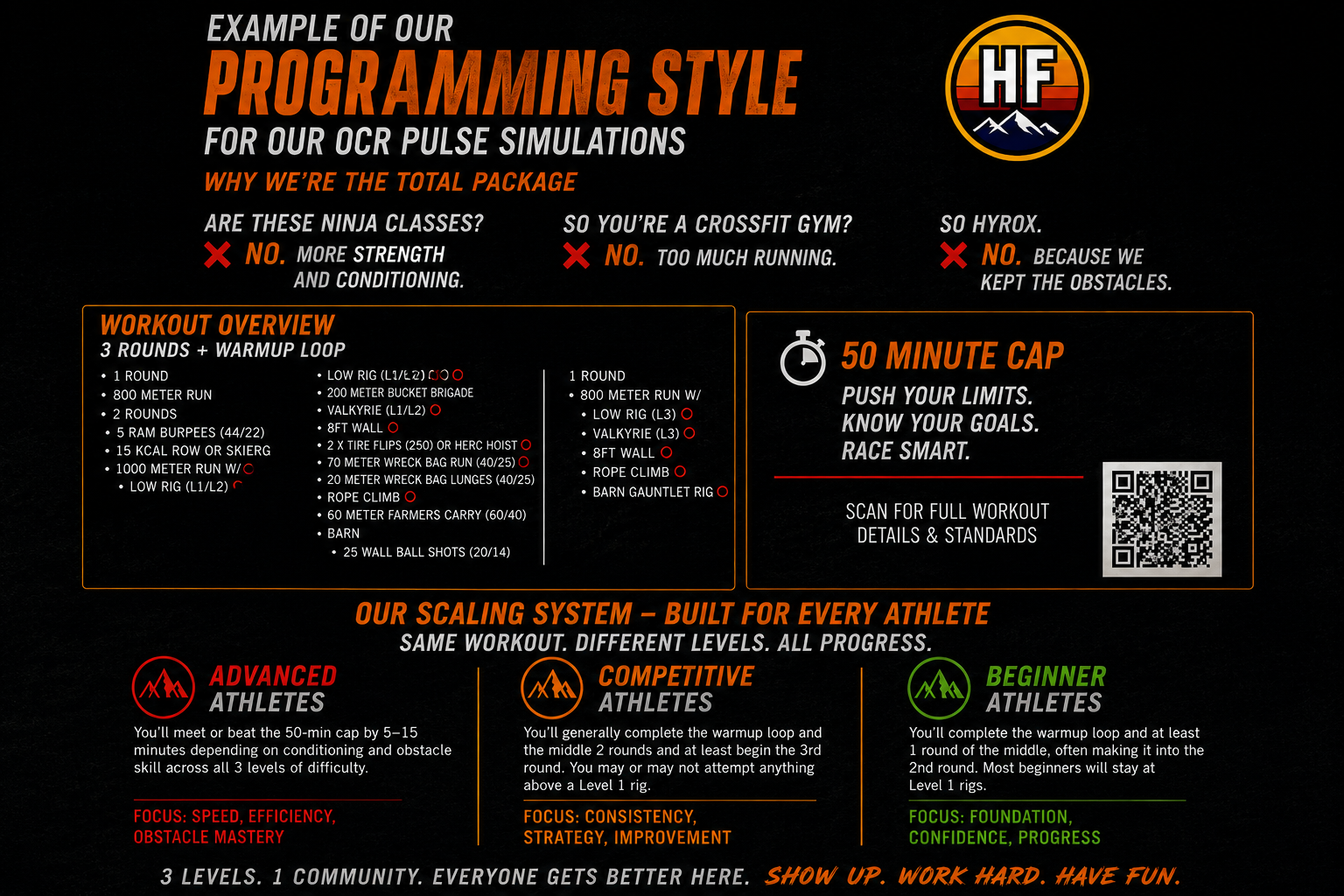
WHY HARTFIT COMBINES ELEMENTS OF SPARTAN, CROSSFIT, DEKA & HYROX- WITHOUT BECOMING ANY OF THEM
If you’ve been looking for OCR training in Colorado Springs, chances are you’ve asked yourself one of these questions:
“Is this basically a Ninja Warrior gym?”
“So… CrossFit with obstacles?”
“Is it like HYROX?”
The answer to all three is the same.
No.
Not because those training styles are bad—they each do some things exceptionally well. But because Obstacle Course Racing requires a much broader skill set, and our programming is built around developing the complete athlete.
OCR Isn’t One Skill. It’s Many.
A Spartan Race, Savage Race, Frontline OCR, or OCR World Championship doesn’t ask you to be great at just one thing.
You need to:
Run efficiently over varying terrain.
Recover while moving.
Carry heavy objects.
Climb ropes.
Traverse technical rigs.
Grip under fatigue.
Make smart pacing decisions.
Adapt to changing conditions.
That means your training has to reflect all of it.
That’s exactly what our OCR PULSE Simulations are designed to do.
More Than a Ninja Gym
Ninja training develops incredible obstacle proficiency.
We respect it.
But obstacle skill alone won’t get you through an 8, 13, or 31-mile race.
You’ll eventually have to leave the rig and run.
Then run again.
Then carry something heavy.
Then climb another obstacle with an elevated heart rate.
At HartFit, obstacles are only one piece of the puzzle.
Every session also includes:
Running
Strength
Conditioning
Carries
Grip endurance
Recovery under fatigue
Race strategy
You don’t just learn obstacles.
You learn how to perform them when you’re already exhausted.
More Running Than CrossFit
CrossFit builds phenomenal strength and work capacity.
But most OCR races are won and lost between the obstacles.
Our athletes spend far more time running than lifting because that’s what racing demands.
You’ll still:
Row
Ski
Carry
Lift
Push
Pull
But everything supports becoming a stronger obstacle course racer—not simply improving gym performance.
More Obstacles Than HYROX
HYROX has exploded in popularity for good reason.
It’s an outstanding fitness event.
But HYROX, which attracted most of the athletes who used to be attracted to OCR, has no obstacles.
It’s also almost exclusively indoors while running in circles on concrete.
Our style of HYBRID Fitness isn’t AND it involves OCR elements such as:
Rope climbs
Multi-level rigs
Monkey bars
Grip transitions
Walls
Carries
Technical movement
Because those skills separate obstacle racers from everyone else.
We Know Hybrid Fitness Because We’ve Lived It
One misconception is that because we emphasize obstacles, we somehow ignore the fitness side of training.
Nothing could be further from the truth.
HartFit is proud to be a Founding DEKA Affiliate, and we were also among the early HYROX affiliates before choosing to focus exclusively on the direction that best aligned with our mission.
That experience wasn’t wasted—it became part of our programming philosophy. In fact, well before either of those brands ever existed, HartFit was already building fitness for OCR through the very elements that would come to be known as “HYBRID Fitness”.
We’ve spent years studying and coaching the same training principles that make athletes successful in DEKA and HYROX:
Aerobic endurance
Functional strength
Work capacity
Sustainable pacing
Efficient movement under fatigue
Strategic race execution
Those qualities are essential to becoming a better obstacle course racer.
The difference is that we never stopped there.
We simply added what OCR still demands:
Technical obstacle proficiency
Grip endurance
Rope climbing
Wall techniques
Carries over varied terrain
Uneven surfaces
Real-world movement challenges
Rather than choosing between OCR and hybrid fitness, we combine the best elements of both into one complete training system.
Our Programming Has Purpose
Every workout follows a progression.
Rather than random exercises, each simulation develops specific qualities:
Aerobic endurance
Obstacle efficiency
Grip stamina
Strength endurance
Mental resilience
Decision making
Recovery while moving
The goal isn’t simply surviving a workout.
The goal is becoming better at obstacle course racing.
Everyone Trains Together
One of the biggest misconceptions about OCR is that beginners and experienced athletes need completely different workouts.
They don’t.
They need different expectations.
That’s why every OCR PULSE Simulation includes our three-level scaling system.
Beginner Athletes
Focus on:
Building confidence
Learning obstacles
Improving consistency
Completing quality work
Competitive Athletes
Focus on:
Increasing volume
Improving pacing
Better obstacle efficiency
Smarter race execution
Advanced Athletes
Focus on:
Maximum performance
Race simulation
Speed
Obstacle mastery
Beating the workout cap
Everyone performs the same style of workout.
Everyone improves.
Everyone belongs.
Race Smart, Not Just Hard
One feature unique to our programming is the 50-minute cap.
Many athletes assume the goal is simply to finish.
Not always.
Sometimes the smarter decision is recognizing where your current fitness level is, making intelligent adjustments, and living to train another day.
That’s exactly how successful OCR athletes race.
Built for Colorado Obstacle Course Racers
Whether your goal is:
Your first Spartan Race
Savage Race
Frontline OCR
OCR World Championships
Becoming a stronger hybrid athlete
Improving your overall fitness
Our programming prepares you for real-world performance—not just gym performance.
Train Like You Race
At HartFit ELEVATE OCR, we don’t specialize in one discipline.
We combine:
Endurance
Strength
Conditioning
Technical obstacle proficiency
Strategy
Mental toughness
Because that’s what obstacle course racing demands.
Three levels. One community. Everyone gets better.
If you’re searching for OCR training in Colorado Springs, Spartan Race training, obstacle course race coaching, hybrid fitness, or endurance coaching near Peyton, Falcon, Elizabeth, or Elbert, HartFit OCR PULSE Simulations are built to prepare you for every part of race day—not just one piece of it.